Showing posts with label Writing Craft. Show all posts

Thursday, November 27, 2025

Have a Wonderful Thanksgiving!

Remember. I always say to do at least one thing for your craft EVERY day? And yes, you are thinking, "But Scott, this is Thanksgiving (in the US), Waaaaaaaahhhhh!" I, don't care. Here is your task.

Here is what I want you to do today! It is nice and simple. 

Look at what you just wrote. Don't criticize it. Just look at it and be thankful.

That is so many more words you wrote toward those two words you are shooting for "THE END"

Now, go enjoy the day! 

Wednesday, September 17, 2025

Don't Start Writing Yet!

How many of you have unlimited time on your hands? 

I actually asked this question to a group of college students one day and one student did raise his hand. Everyone in the room turned and stared at this guy. "Really?" we asked. He actually said yes. Did he have a job? No. (Note, this guy was 28ish in age). Where did he live? At home. Who cooked his food? Mom. Who did his laundry? Mom. Did he do work around the house? No. What did he do all day? Video games. Who paid for school? Parents. 

Yes, the class wanted to kill the guy.

The reality is, we really do not have unlimited time on our hands. I bring this up because, as writers, we cannot waste time. When we sit down to write, we have to maximize the time we have. We cannot spend hours or even months writing something and then find out that the story is not going to work or that we have to go back and fix entire sections of our story.

I teach a class on marketing and this is a big section of the class. Marketing is not just about selling the book but doing market research and determining if there really is a market for your book and idea BEFORE you even sit down and start writing. If there is no market, or the story is not ready for your book then why on Earth would you even waste your time writing the story, other than just to exercise your brain?

Again, I know some of you are thinking, "But Scott, if the writing is good, then maybe I will be the one starting the trend, or maybe I am going to be filling a niche that is not out there now." Yes, that MIGHT be the case, but the odds are that IS NOT going to happen. I would also say, that is not what I am talking about. 

Think of it this way.

You have been thinking about your wonderful grandmother Ellen. She was a wonderful woman and she had some great stories. Wow, she needs a great story about her. You loved listening to all of those stories about her life in Carthage, South Dakota. Growing up in the Great Depression and so on. This is survival. This is the real world. Sure, that sounds great and all that, but honestly.

Does ANYONE other than YOU really give a fig about your grandmother Ellen? Sorry, but the answer is NO.

There is not market for this. You will not sell this book. End of story.

We saw the same thing after Covid. You had this great idea of a relationship that formed over the Internet between two people struggling in isolation during Covid. Wow, this would be great. People CAN relate to this since we all wen through it, right?

Ummm, I don't know about you, but I DO NOT WANT TO RELIVE IT. Nope, not going there again. Don't waste our time.

I can go on and on with these ideas.

What you need to do is really take a serious look at your idea and ask, is it really going to sell. If there are already a ton of books on your topic, will people want ANOTHER book saying the same thing? If there is nothing out there, is there a reason for it?

Just think before you write, "Once upon a time...." 

Monday, September 15, 2025

Rule Number 1 - Learn To Write!

This last weekend, I was at a writer's conference and once again, got to listen to the fantastic Jane Porter speak. She spent time talking to the authors about the top ten things to be successful author. Her number one point, which I almost jumped up and down and screamed AMEN like I was at a Baptist church service was what I say all of the time.

LEARN THE CRAFT!

As she noted, while writing is a personal craft, in the end, you are writing for the reader. Your reader is spending money to buy something of quality and they expect you to produce that quality. This is where you need to take that time to learn your craft!

She spent a lot of time talking about this. She spoke of learning to pace your writing. She talked about creating characters that we can relate to. She talked about creating plots that truly tell a story. But in every case, she kept returning to the author learning how to do this effectively and how it is not just something everyone can just do. Some people can, but for many, it takes time to figure it out. 

I think what I loved the most was her constant reminder of thinking about your story as a product and putting the reader first. In fact, we had a chance before her talk to sit down for a quiet quiet chat (which is often rare) to just talk. One of the things that came up was the number of times each of us heard authors speak of writing "the stories of their heart." The authors would emphasis that this was the story "they" wanted to tell. We both agreed that while this was important, these authors often forgot that this was also a business, and in the end, if we are to sell a product, we still had to think about the consumer, and that was the reader. 

I know that I have spent so much time talking about the marketability of the product, but this weekend, we both found ourselves spending a lot of time talking about the quality of the product we are putting out. Your story can be personal, but if it is poorly written, it really doesn't matter. 

So, as you go about your writing this week, spend some time looking at what you are doing and think about the areas you could likely improve on. Now, make some plans on how you can improve on that area. 

And, as I always say. Don't rush the process. There will be time!

Tuesday, September 2, 2025

Always Keep Checking Your Genre When Writing

Write what you know. This is something we have heard a lot as writers, but sometimes, I do think we forget about it. I do think a lot of published writers forget this a lot. Once they sign that contract, see their name on the cover of a book, they seem to believe they are good to go. Unfortunately, we can never stop learning. We always have to keep our eyes out and pay attention to anything that may be changing. 

You have likely seen an earlier post or two where I have talked about musicians who have stood the test of time. Madonna, Aerosmith, and The Rolling Stones are great examples. All of which have found ways to adapt to the times. None of these groups just said, "this is what I do so stick it in your ear." They found ways to keep their own voice, but still work with the time. 

Recently, I was talking with an author and she was noting that while she was working on her latest book, she decided to stop during the early phases of her writing and just make sure she was still working with the latest flow of things but still with her own voice. She picked up a few books at her local book store (support those bookstores and authors) bought a few online and read.

She was good to go. 

What she was looking for was pacing, voice, and structure. No, she wasn't looking for character type or tropes. It was just the way the stories were structured.

Now I know what a lot of authors have told me. They don't want to read in their own genres because they believe they will steal other author's words. Honestly, if you have that much lack of self control, you might have some other problems. Seriously, it is a good thing. It is well worth it.

Friday, July 25, 2025

Synopsis Writing Course!!!!! Winter 2026

 Just heard from my coordinator at UCLA Extension!

They want me to teach a 4 week long course with them on synopsis writing in Winter, 2026! Of course I said YES!!!!!

This will be totally asynchronous! Each week, the modules will open at 7 am Pacific time. All work for the week will be due the following Friday at 11:59 pm Pacific time. Each week you will have a discussion board on a small topic and a small writing activity, WITH feedback from me. At the end of the 4 weeks, you will have a full 3-5 page synopsis WITH feedback from me, for our novel.


SUCH A DEAL!!!!!


I'll get you more details later. Still, check out the UCLA Extension program for other opportunities. BTW, this will also be similar to the same program I will be running through my program here at Greyhaus!

Tuesday, July 8, 2025

Commit: Go Big Or Go Home

I was working through some edits with one of my clients this weekend and this concept came up. It was about an element she was using in her series she was working on. I don't want to go into too much detail on the concept here but, we were doing something kind of unique. In any case, in her first book of the series, she used a bit of this concept, enough that made it important enough to the storyline. Now, here is the kicker. When we hit the second book, that concept was barely noticeable which was reading amazing without it. Ugh.

This is when I got thinking. What do we do? We have two options now: 1) eliminate the concept in the first book; or 2) add the concept in the second? Technically, either way works... maybe????? Or does an option ruin one of the books?????

When it comes to doing something unique in your stories, you have to fully commit to it. You have to decide to, as the title of the blog says, Go Big Or Go Home. You cannot half-way do things. Let me give you a couple of examples where I see this happening a lot.

Authors who try multicultural romances. I think these are great stories. This is a chance to truly dig into the cultural experience. The problem, however, is that they don't Go Big Or Go Home. Just having the two characters with different skin colors is not a multicultural romance. Sorry, it isn't. First of all, do not get me started on the concept of culture here. My wife, who is a communication instruction who specializes in this will get on my be all over this blog, but culture is more than skin color. It goes MUCH deeper. These stories have to really have culture literally being a character in the story. 

Think of it this way. While I loved the TV version of Bridgerton, changing the ethnicity of the characters did nothing to change the storyline of the story. 


It did not suddenly make this a multicultural story. It is still the same Julia Quinn novel.

Does that make sense?

Authors who want to write "hot steamy stories". I get this all of the time from authors who send queries and tell me that they know that hot steamy stories are the new "in thing" so they have written one. But do they? No. They often take two approaches. They either spend the entire novel writing nothing but erotica and what they think is hot writing (which ends up as nothing more as graphic sex scenes with no plot), OR, they write everyday stories and then, in the middle of the story, write one scene that is very out of place with a hot scene, which is often writing the same thing that previous author did, but just one time. 

Not what we are talking about.

Those hot steamy stories are the ones where the characters are hot and steamy through the whole thing but guess what? It is not about the graphic sex. It is not about how many times we can use graphic words and descriptions. If you want to write these stories, GO BIG OR GO HOME. Really tell the romance and make it true. 

Authors who want to write time travel. Ugh...I am going to leave it with this one. Again, GO BIG OR GO HOME. These stories have to be just like those multicultural stories. Remember how culture had to be a character? Well guess what? The time travel has to be as well? Just transplanting your heroine in the Regency period and calling it quits is not time travel. It is now a historical. If you think about Outlander, Claire and Jaime are constantly having to deal with the issue of knowing too much about the future, about what Claire knows about how to get back, about what if she goes back and leaves Jaime, about the fact that her kids can go back and leave her family.... the list is endless. Time matters. It IS a character. This is not just a historical. 

Get the idea?


Tuesday, June 24, 2025

Think As The Reader

Authors have tunnel vision. This is a simple fact and it takes some time to break yourself of that habit. This is part of the reason why having a strong critique group who can be honest with you and have a diverse background and thought pattern can help you. Here is the thing. When you start writing your story, you only see the story in the way YOU crafted it. 


There is only one path as you see it.

However, that path might not be the best path. But darn it! You are stubborn author and you are not going to change it for anyone! You can out argue anyone who says anything different! But this is when you DO need to listen. And this is why I always tell authors to stop every now and then and think like the reader. I do this not just with their stories, but with their synopsis, with their query letter, with their resume, with their pitches. It doesn't matter. Turn the table around and look at it from the other side. In my resume writing class, I always say "Would you hire you?"

Consider this... You know exactly what your character looks like and sounds like. That character is perfectly formed IN YOUR BRAIN. But it is your job to translate that collection of electrical impulses in that lumpy mass between your ears into something intelligible on the page in front of you. That is what I mean of Think As The Reader. Would your reader, who has never been there before, has never experienced that before, has never seen it before, fully get what you are saying? 

If not? Fix it! 

Thursday, June 19, 2025

Writing With Tropes

For romance writers, we all know about those tropes: secret babies, arranged marriages, friends to lovers and so forth. All of these are great elements to stories, however, too many author make HUGE mistakes when they write their romances. They simply make the ENTIRE story about the trope.

That is a problem.

Let me explain. 

If you make your entire story about that single trope, the story becomes repetitive. Your story has to keep coming back to the same point over and over again, just from different angles. At some point, your readers are going to just get bored. Frankly, there are only so many ways you can say the same thing.

What we really want you to see is to just use that trope as a small part of your bigger story. If you want to give us a regular contemporary romance, let's say you set it in the corporate world and the two characters are fighting for the same job. Not anything overly fancy but you get the idea. Now, we can throw in the "secret baby" part but maybe just hide a pregnancy knowing that might screw up the corporate plot line. Get the idea? It is just a piece of the puzzle. 

Again, when you think about those tropes you see editors talk about what they like, this DOES NOT mean they want you to write the trope. Just remember that.  

Friday, May 23, 2025

Does Your Story Have A Purpose

I have been reading a lot of stories with some great characters, great writing but the stories go absolutely no where. Why? They have no purpose! And for a romance, this really becomes a huge problem. 

Consider this. We know, with a romance, there will be a happily ever after. We know that the two characters, by the time we get to "the end" will be together. We know that along the way they will, to quote some very poorly written query letters, "will meet some quirky characters, have some awkward moments, engage in some passionate time together between the sheets, and have to overcome some difficult decisions" OK, we got it. But these are all just scenes. These are episodes. These happen in EVERY book and EVERY story. But what is the point? Where are we going to with this?

The same goes for women's fiction stories where we have that main character who is just going though life in a small town. Sure, small town USA in Minnesota might be cute. The cafe with those great cinnamon rolls and that "quirky" owner who knows everyone's name is awesome. We all love Stan the barber who sits on his porch every day waiting for people to come by and hear about his latest fishing trip. But what is the point. We are just sitting there watching a dog sleep in the sun (Thank you Ben for this cameo). While it is nice to just enjoy, there is no point to the story. 


As you think of your story, you need to focus on a theme of your story. You need to think of a "take-away" What do you want your readers to leave with by the time they finish the story. If it is a romance, do we want us to learn that it is OK to change a dream that we had and take on a dream of someone else because love conquers all? Is it that sometimes we have to look outside of ourself and our comfort zone to find true love? If it is a women's fiction, are we to learn that maybe that small town is not that perfect place that we thought it to be (Consider the poem Richard Cory). 

Seriously, on my Kindle right now, the majority of the stories that I will be responding to all have fallen into that category. There does not seem to be a point the story. The writing is fine, but the stories are episodic and just plod on with no real purpose. 

So find a reason for the story to happen! 

And, by the way. If you story is ALREADY written, you CANNOT just go back and claim that there is a purpose. If you did not have one when you started writing,  you cannot just go back and mysteriously find one. It probably is not there.


Tuesday, August 10, 2021

Why Did You Do That In Your Story

Consider this scenario...

You are at your critique group and one of your fellow writers has suggested you add something to your story. Maybe it is adding a prologue. Maybe it is some creative way of using dialogue such as email, or text message. You trust this person so you just go ahead and follow their directions. I mean, they know what they are talking about, right? It worked for this other author, so it must be something that will work with your writing, right?

Not so fast... While that technique might have worked with another author, or in another book, it may not work for you. Do you even know WHY that other author used that technique? 

Too often, authors just blindly follow techniques that are told to them by other authors, in workshops, or even in craft books they buy. They might even be told to use this technique on a blog such as mine. While we know that techniques like this work, the key is to always know two things:

  1. WHY did the author use that technique?
  2. WHAT impact does that technique have on a story?
What authors fail to understand is that if they are using a technique that is not right for the story, it WILL have an impact on their story and it WILL not be a positive impact.

I see this all of the time after attending a conference such as the RWA National Convention. There will be techniques being taught all day for several days, and, sure enough, following that conference, I will have a stack of submissions where authors started using this new "technique." Unfortunately, in all of those cases, it did not work out well.

I want you to consider something. Hemingway wrote some pretty funky sentences in his novels. Fragments, run-ons, you name it. But here is the thing. Hemingway was someone who understood grammar better than most people. He knew when he could use a fragment and actually use it correctly. For the common person, using that grammar would make you look like an idiot. 

It is very important that we read other authors and see what techniques they are using. This is called research. BUT, before you start into using those techniques, take the time to understand all of the WHYS behind that technique. What was it doing to the story in that location? How did it shape that story. 

You have heard me say this over and over here on the blog. Writing well takes time. It takes the time to truly learn the craft. To learn the grammar. To learn story construction and character development. Writing is not about shoving writing conventions and techniques together to make a grand story. It just will not happen!

Monday, August 31, 2020

Tropes Not Copies

 I know I have talked about this in some version in the past, but it might be time for a reminder. I have seen a ton of projects lately where, after I read it, I am immediately think, "Wait a minute! Did I just read a synopsis for X Movie." or "Isn't this just X Novel?"

What these authors have been doing is making an attempt at using tropes, or idea starts from other texts and movies. While this is an approach many successful authors use, these new authors fail because they ARE just copying.

Getting ideas from snippets of others whether it is something in the news, a commercial, a novel, a song or a movies is always a great approach. But here is the thing. Notice I sue the word snippet and I always talk about this being a start to a story. These are nothing more than inspirations. 

Try it this way. You go to a restaurant and try a dish. You love it, but then there are things that you know the rest of your family is not going to like. You know you are the only person who likes chicken but your family is a beef family. So what do you do? Do you copy the recipe and just change out the chicken for the beef? No! You look at the concept of the recipe and build up your own version. You do create something new based on that inspiration. 

When we talk about tropes in writing, we are focusing in on common universal themes that we know work really well with readers. These are stories that have always worked really well. Secret babies. Lost and rediscovered siblings. Unconventional marriages... the list is endless. But this is again, just a start. You build a story 100% around that idea. 

If your story is too close to that original story, you have just written an automatic story set up for rejection!


Monday, August 17, 2020

Be Careful Using Current Events In Your Novels

 A common thing we see a lot in submissions are authors using the latest things that are happening around them in their novels. These are items that are on the authors' minds when they are writing so it is only obvious those fragments of time work into the story lines. Other authors see this as a way to make a story relevant to that time. They feel this is a great way to "ride a wave" of a certain trend. While this certainly does sound like a great idea, the problem is that the story often now becomes "dated." When that trend is over, the novel loses steam. I would also add that sometimes, those elements around us are things maybe we don't want to read about. Let's look at a couple of examples.

I remember in the early 2000's the push for reality competitive tv shows was big. OK, these are still going

now, but at that time, those watching really felt that this was "real" and not the scripted stories we see with things such as The Bachelor. When those shows hit, we saw a wave of romance and women's fiction novels flooding our inboxes. Everyone thought their story was unique (see the prior post on unique stories). We had romances around cooking shows, dating shows, survivor shows and even some around dogs and cats. Not only did these stories show a lack of being unique, the stories also were a bit flat and could go no where. Why? We had already seen the stories play out on tv. We knew how things would work out for the characters. 

But there is another twist to this. The stories lack a "newness." The easiest way to think about this is to tell your kids about something "really great" from your life. They will laugh. While the idea was great for you THEN, it is not a great idea NOW.

A second factor of adding those elements is that maybe we want a little escape. As I write this, all of the news stations note that we have three major issues facing us today: Covid-19, Economic Hardships, Race Relations. Are these important? Sure. Do we want to address these issues and not hide the issues away? YES! But, when it comes to a lot of fiction writing, especially in the areas of romance and women's fiction, the escapism element is big. We just dealt with all of this during the day. Do we really want to read more about that at the end of the day? 

My wife and I have seen that our pastor has seemed to forget this in the last couple of weeks in his sermons. Each Sunday, we tune in for inspiration, and are bombarded again by more depressing thoughts and ideas. Again, he knows that people are facing this and may want to know some ways to deal with the issues; however, some need a "breather."

To sum this up, just think! If you are putting something in the story just because it is happening today, it might not be a great approach. If the story "truly" needs it, then use it. Just remember, that there may be consequences down the line. 

Tuesday, July 21, 2020

Info Dumps Suck!

I was watching a live chat with an editor friend of mine yesterday and she was talking about first chapters. One of the things that came up was the desire to tell everything the author thinks the readers need to know in that first chapter. This does not just happen in the first chapter, but often happens throughout a book. We call these info dumps. In simple terms, this is when the author has a block of information that is just inserted into a book.

Let's start with what the impact is of these info dumps. First of all, this approach to writing simply slows the reading down. It's like driving along a highway, making really good time, and then get stuck behind a line of trucks on a hill and you are down to a ridiculously slow speed. Ugh!

Secondly, this is going to turn off the reader. Well, maybe not all of the readers, but a good majority. You might think all of the readers need this information, but the reality is that very few are interested in that block of material you just inserted. This is part of the reason why researchers put an appendix into their writing. It essentially says, "If you want to read more about this, go to Appendix C." It works the same way with footnotes and endnotes. In reality though, how many of you stop your reading of a piece of writing such as this, and then go and look at that secondary reading? Probably not a lot. But if you do, think now of how hard it was to get back into the actual reading of the main thesis? The same thing happens with your stories. The info dump becomes a distraction. 

So, how do you deal with getting that information out to the readers? It is important to first ask if that information really is needed? Will this advance the plot? Do you really need to know the true recipe for a meal prepared in 1823? Yes, you might look this up for yourself to determine if the ingredients would have been available at that time or in that location, but unless you are planning to narrate the scene describing the step by step procedure of making the meal, this IS NOT necessary.

Information you provide in your story, from world building to back story needs to show up on a "need to know basis." Give us hints if we need the information for later, if not, hack it. 

The positive part is that all of that information you hacked can now be used to increase your understanding of the characters and their goals, motivations and conflicts. 

Friday, May 1, 2020

Things To Do When You Get Writer's Block


It has happened to everyone. You were plugging along on your story and everything seemed fine and then you hit that point where everything stops. What happens next? Where are the characters to go? Yes, it is that stupid thing called Writer's Block.

Is there an easy cure? I wish there was! Still you have to find a way to get over that block because you have deadlines to meet.

In most cases, this comes from one of two things. The first is maybe you have plotted out your story like I am always promoting here on the blog. All I can say is "Sucks to be you! I warned you!" Of course even with plotting, there will be days when you know what is supposed to happen next but the words are just not there.

This can be because you have been pushing yourself on your writing. If you have been so deep into the story, you have only been focused on those words on the page happening right at that moment. New chapter? Now what! In other cases, you are probably overthinking things. You are trying too hard to make the story 100% perfect on the first pass through.

So, here are some solutions I know many of my writers use:
  • Stop that book for a minute and go plot out an future story. Please understand I am not saying to take months off. We're talking hours to no more than a day.
  • Talk to someone about the story. Simply talking it out might be all it takes. 
  • Clean the house. Yes, getting completely away from the story is sometimes the best method for figuring out something that will work.
  • Just type something. If you know where the story is going, just types something and move on. You can always go back and fix that single scene later. Think of it in Bridge terms (talking the game here). You need transportation to get to that next card. The same thing happens with writing. Maybe that next scene will give you a clue of what to put in that prior scene.
  • Scream and yell... OK, it might not really help but why not!
Let me know what some of your ideas are.

Wednesday, April 15, 2020

Learn From Bad Writers

There are a lot of ways to improve our writing. We can take workshops. We can follow blogs. The list is endless. One of the most obvious ways is something I talk about here on the blog a lot. Read authors that have made it. Read those authors who have just signed with a publisher you want to work for. But, there is another way that might not seem so obvious, and it is something I have used a lot when teaching college writing.

Read the bad stuff.

That's right. Don't read the good stuff, read the bad stuff.

What I would do in those college classes is to show the examples from many of the textbooks. If, you have ever looked at those books, many have essays that are far from stellar. These are basic and boring essays, but the authors have used these because they are short and simple, or just highlight a single concept. In reality, these are bad essays.

My classes would then evaluate those essays and develop solutions for fixing the essay and make the writing an A paper. The students get two benefits here. The first is to see what bad looks like and then be able to see that in their own writing. The second is that when they found bad things, they were able to figure out solutions. This second part gave them a strong tool for their own writing. When they found themselves in that same situation, they knew how to work out of it.

One of the issues with reading only the good stuff, is that because it is good, you get sucked into the story and your brain just does not have the ability to study and analyze the writing. But, when it is bad, you are forced to slow down and determine what is killing you about the writing.

So how do you incorporate the bad into your writing. Very simple - If you hated it, then just don't do it!

Monday, April 13, 2020

Where Do You Find Inspiration For Your Stories?

I am sure as authors, you have all been asked this same question - Where do you get your story ideas from? I will keep today's post short because I would love to hear from all of you. But, for those of you who are authors and still struggle with this, let me throw out a couple of ideas.

One of the biggest concerns authors have is taking too much of someone else's story for their inspiration. We hear over and over again about plagiarism charges and these are certainly serious. So, how do you get those ideas? Look at small pieces of life.

One of the things I do with a lot of my authors is take a single situation for a character. Consider the following (please note these are for romances because that is what I represent):
  • Heroine is caught in a potential criminal situation and has only one place to turn, the guy she had a crush on for support.
  • What if the hero and heroine are in competing businesses and now have to fight for a piece of commercial property?
  • Hero of a story meets a great heroine only to find she is a ghost trying to come through.
The idea is just to start with a snippet. Don't push for the whole story.

Several of my historical authors like to start with an event that happened in history and then think of characters that might have been there at that time.

You can also start with a setting. You are driving down an old country road and see some small town?  Who lived there?

I love this last one a lot, mostly from my background in literature. In high school, I totally fell in love with Edgar Lee Masters SPOONRIVER ANTHOLOGY. This later turned into my love of William Wordsworth and Lines Composed a Few Miles Above Tintern Abbey.

So, share some of your places for inspiration!


Wednesday, January 15, 2020

Do You Know Why?

A friend of mine from teaching recently sent me a student's piece of writing. The teacher was overly enthusiastic about the work and really felt like this might be worthy of publishing. OK, first of all, we see this all of the time. When a kid does something better than average, teachers and parents immediately go into "TIGER MOM" mode. In any case, I did take a look.

The writing was not bad. It was OK and certainly utilized a lot of techniques that would normally be taught in a creative writing class. The student also had a good command on a particular sub-genre. The story lacked serious depth of character and plot development. There was an excessive amount of telling and very little showing. Still I read on, but as I did, I had a lingering gut instinct. Did this student really know what he was doing, or was he someone who could just copy (not plagiarize) a pattern and style? Did he really understand why he was doing what he was doing, or how this was really working in the story.

A lot of new authors face this same problem. This is why, being a serious writer, takes time and education. For most new authors, they can "copy a pattern." They can take workshops, learn a new technique and put it in the story. But that is as far as that skill goes.

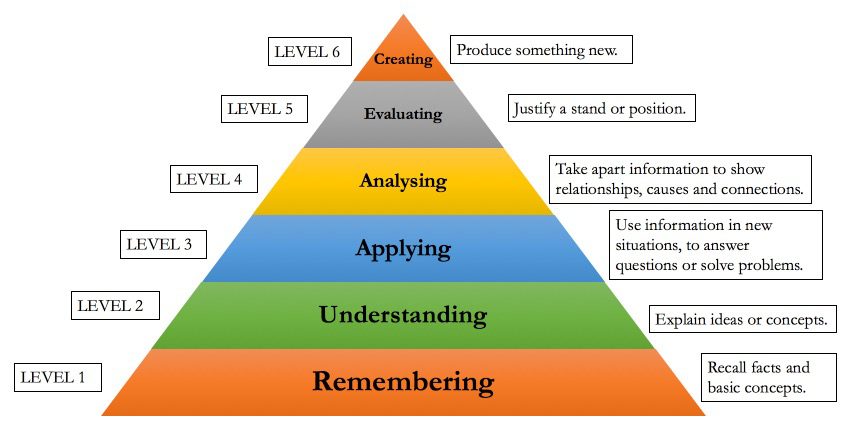
I have referred to this in the past but review Bloom's Taxonomy


 Where most authors, such as this student fall, is the third level of Applying. The key is to move beyond this level and to do so requires analyzing the writing of other authors as well as your own writing. When an author does something in a story that works or doesn't can you figure out what was occurring? Now, to take it to a new level, if something is not working with a story, can you figure out what needs to get done?

I want to stress this again. If you are at this lower level as an author, it is fine. Learning any skill takes time and effort. Writers will not be amazing with their first manuscripts. Like this student, he has a good start, but a long way to go.

Tuesday, September 10, 2019

Over-Working Your Stories

This is a cautionary tale.

We all want to make sure our story is great when it is sent out to those editors and agents. We want to make sure that story is right on the money for our readers. But sometimes, over-working it only ruins it.

This is a problem a lot of authors have around the world so if you feel you are in this group, don't panic! You aren't alone. Still, this is an issue that has to be fixed!

I started thinking about this when I was talking about his creative writing class in college. His professor is one of those authors who fine tunes everything. She will spend hours working on a single passage, massaging it, changing single words over and over again to conjure just the "right image." In the last 8 years, she has written three novels (I should note, the size of a Harlequin Historical).

So, was it worth it? Probably not. I read a couple of excerpts and while it is clear that the writing has been worked really hard, the writing itself becomes difficult to read and distracts from getting the plot across to the reader. In a lot of ways, the writing starts sounding like something I describe as NPR Literary Fiction. If you have ever heard authors such as this on NPR talking about their books, they discuss the writing as so elevated above the common man. They talk about the imagery of a blue door to their house as if it is symbolic of the deep philosophy of ancient warlords in a long forgotten civilization.

Will your readers get this? NO!

I am not saying to not use metaphors and symbolism. I am not saying to not work and edit your stories. I am saying, that much fine tuning becomes over-kill

Friday, September 6, 2019

Deep Work, Deep Writing

I had heard about his once before, and just a couple of days ago, I heard it again. This came from NPR's HIDDEN BRAIN program. The concept is known as ""Deep Work."

This really became relevant because just yesterday, I was talking to one of my clients who had been struggling with her writing. In fact, she had called noting she had only gotten one page written that day. For this writer, this is a big setback. She is someone who could normally average 7-15 pages on a regular basis.

So what happened?

She had never gotten into that Deep Work State.

Deep Work, in simple terms, is the idea of becoming overly focused and immersing oneself in an
activity. Cal Newport, in his book focuses on how to eliminate distractions to allow you to fully get involved with the work you are doing.

He talks about people, believing they are fully involved with their work, but will stop, every now and then, to...
  • check an email
  • check social media
  • check on anything...
While it might feel like you just took a quick side look at this message, that small shift caused you to get distracted just enough to lose that focus.

IN the case of the writer, the dogs were just being dorks. She would sit down at the computer, thinking they were settled, and then one would feel the need to get up and walk around, accidentally bumping into one of the others and then distraction would kick in. Add in that, if the dogs were settled, the phone would ring from one of the kids in college in New York, or the infamous robo-call.

It sucks. And, we have all be there.

So how do we fix this.

It might not be something you can do all of the time, but when it is time to write, un-plug, eliminate those distractions. Try...
  • Have the spouse or family member use this time to take care of the things you would have done.
  • Turn off ALL social media.
  • Unplug the phone.
  • Turn off the cell phone.
  • Close the door.
  • Etc.
This IS possible to do, but it requires a commitment and dedication on your part.

Again, you will not likely have the chance to do this all of the time, but if you want to be successful, you have to do this more often.

Have a great weekend!


Wednesday, August 21, 2019

Why The First Three Chapters Matter

This will be short and sweet today.

The first three chapters of your story need to rock! These chapters need to be the best writing you have ever done in your life, and the reason is simple. It is these chapters that your readers will determine if they like your writing or not.

If you think about it, as a reader, how much time to do you give an author with a new book? Generally, it is around three chapters. You start in on a book and the first chapter is slow. It's OK. You'll attribute this to getting to know the setting and maybe a character or two. Now we hit the second chapter and it's still a bit slow, but we are still giving the author the time. Maybe the author just wants to work in more on a character or some layering. By the time you hit chapter three, you are hoping the character(s) and conflict are finally in motion. If not, you have given up. That book is now tossed aside and you move on to something new

You'll notice, at some level, you have created excuses to justify the slow writing.

Editors and agents are doing the same thing. They have a ton to read on their TBR pile (other submissions, client edits and proposals and so forth). They are not going to wait around for chapter eight or ten for things to get good.

If you think of those first three chapters, you want to hook us with great writing, great characters and great voice. You want us to get to the point we cannot stop reading.

Does this mean you start with action? No! But you do want to start with forward movement. Characters sitting around having tea, or pages upon pages of setting building or information dumps is not going to get you going.

I often think of James Michner's CENTENNIAL. Now let me just say, I love the book and I totally loved the mini series (when a mini-series really was a mini-series). But when it comes to the writing, that first chapter is not the best. The geological time record of the Colorado is not uplifting material (and not as in Basalt). Michner, however, was able to get away with this because he had already established himself as a writer.

You haven't.

Make sure to really work through those pages. Make those pages shine!