Showing posts with label women's fiction. Show all posts

Monday, June 8, 2026

Find The Middle Ground Please - Writing Women's Fiction

This last weekend, I was reading submissions and there was a ton of women's fiction coming in. People, you have to find a happy medium here when it comes to plot lines. I literally saw two styles of writing. 


1) Totally depressing stories that would lead anyone who reads it to heavy drinking.

2) Ridiculous and stereotypical "rom-con" plot lines masquerading as women's fiction. 

And guess what? I pretty much rejected both types and the reason was simple. readers, in no way, would be able to connect with either of the plot lines as they should with a true women's fiction novel. Both concepts are simply too extreme.

I have talked about this before, but the thing that makes a women's fiction novel unique is the way it SHOULD connect with the reader. These stories need to have "a take away." That unique idea or concept that the reader walks away with, after reading the book saying "Now I get it. Now I understand X going on in my life, or in the world." These are stories about people, how they see the world and how they navigate issues going on around them. 

However, when writers, in an attempt to "stand out" or "make the story interesting" pile on so much extra stuff, no reader is going to be able to relate to all of it. 

  • We can relate to a single divorce, but we can't relate to a divorce, and then pile on a personal disease, a parent who is also sick, a loss of a job and then a kid with a drug problem and then another who is pregnant. 
  • We can relate to a funny situation of meeting up with the person you had a crush on in college again, but when we add in that each of you have 3 kids, a housekeeper, and two of the kids want to start dating each other, and you are in competition for the same job in a company, and you both have to relocate, and there is the crazy lady at church trying to get the characters together... too much.
Along the same lines, when it comes to women's fiction, there were a lot of you out there just writing your personal stories and then "fictionalizing" the stories. Honestly, my recommendation is to just write your story and don't try to change it. When authors fictionalize their story, they often add on all of that other "stuff" because they feel "their story" is not that exciting, and then they run into these same issues. 

Thursday, December 30, 2021

Women's Fiction - Question From a Writer

In light of the conversation this week on romance and women's fiction, I had an author recently submit these questions to me. I figured this would be a great time to answer the questions. 

1.       What is the preferred word count for women’s fiction? I’m assuming this will be in the 100K+ range.

2.       I want to include some scenes where characters discuss well known novels like Lord of the Rings & Harry Potter; and Jane Austen & Mary Stewart. Can the titles/authors be used – or how would this be best handled?

3.    Is a light, adventurous, touch common in Women's Fiction, even when dealing with challenging topics like grief and fear?

These are great questions, so let me take the time to address each of these individually. I do want to remind you that, like everything in publishing, there are not necessarily fixed rules. The story will always dictate the approach an author takes. I would also add that even if the story is well written, there are no guarantees it will be published. It has to be right for the market, right for the editor and right for the publisher.

As far as the word count goes, generally publishers are looking at anything from 75K to 110K. Can you push that limit on the upper end? Maybe???? You have to remember that the larger the book, the better the book needs to be. You are looking at costs dealing with things such as formatting. You also have to understand that publishers know how much someone is willing to pay for a book. Get over that range and they are not likely to buy your book. For first time authors, I would still stick to no more than 100K.

Can you include scenes when your characters are reading famous books? Sure. Mentioning more modern books will tend to date the book and really stick it in a time period. The older classics are not a problem. If it is, a publisher might ask you to change it, but I would doubt it.

I am going to take a stab at this third question. I think I know what you are asking but I am not sure. You are wondering if you can take a lighter tone with difficult topics? For this, I would again refer to the comment I made earlier. The book will dictate the approach you take. If the characters are having a tough time dealing with the issues you bring up in the book, having a lighter approach is simply not going to work. We write stories and put elements into the story when the story needs it. I brought this up yesterday when talking about the sensuality levels in romance novels. You would only add the sex scenes in the story IF the story needed it. If not, you leave it out.

I would also add here that the tone you take in your book depends on the natural voice of the author. If you are someone who writes best with a lighter tone, then it would be best to avoid the darker and more emotional topics. The same would be true if you write in a more serious tone. Writing Rom-Con is probably not the best approach you need to take.

Finally, remember that there are not specific styles to genres. For example, New Adult or YA does not have to be written in first person. New Adult writing does not have to be just about 20-year old's having sex and talking about alcohol. Women's fiction does not just have to be about depressing topics. 

I hope these answered your questions!


Wednesday, December 29, 2021

Understanding Women's Fiction

When I first started Greyhaus Literary Agency, I was overly frustrated that there was lack of a definition for Women's Fiction. Authors would submit stories to publishers being told their story was more of a women's fiction instead of a romance, or visa versa. What is interesting is that there really was no clear definition. With that in mind, I set out to really dissect that style of writing and create a definition. This is the one I tend to stick to when I am looking to projects.

First of all, let me start with common myths about women's fiction.


Hopefully this gets you thinking a bit. But let's dive into this a bit more. If this is not what women's fiction is, then what is it?


Let me break this down for you a bit more.

When we talk about the female journey, we are talking about how a woman navigates the real world. This connects to the later points of what it is to be a woman, but also how the woman sees the world. It is that unique lens that they view the world with. If you think of Phillipa Gregory, she writes Historical Fiction but the perspective of the Tudors is through that female lens and not the standard, male historical fiction we often see in history courses. 

I want to take some time here to talk about common themes. No, this is not a limited list, but it should give you an idea. Themes might include coming to grips with working in a male dominated business or culture. It might be traveling to a country that sees women as different. It might be family issues or exploring the world after a major life change.

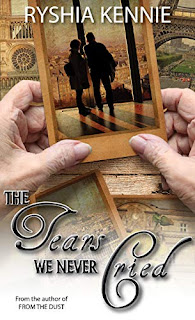
Let me stress here that women's fiction DOES NOT have to include every theme in one book. Really good novels tend to focus on just one issue. For example, in Ryshia Kennie's novel, THE TEARS WE NEVER CRIED the focus is on a daughter coming to grips with her mother's onset of Alzheimer's and the urgency of getting to know her mother better before time is up. While the topic is not one that we want to face and might seem depressing, it is a story that readers can walk away learning something from it. It is one of those books that the reader can connect to.

I think another piece of women's fiction is that these are the books that tend to get picked up for Book Clubs. What is interesting is that the themes in the books lead to personal discussions and not talks about the actual book. Women's fiction is a genre that lends itself to personal discovery and reflection.

Now, going back to the other ideas of the Happily Ever After and the sex in the novel. Neither of these are necessarily factors in a story. If there is a happily ever after, then great. If not, who cares? It is all about the message. The same goes for the sex in the novel. It is only needed if it is integral to the theme of the story. 

Hopefully that helps some!


Wednesday, January 1, 2020

Defining Women's Fiction

First of all, Happy New Year's to all of you out there. I am hoping all of you have a great writing and publishing year!

Today, I want to focus on understanding the women's fiction genre.

I think this is one of the most confused genres out there. This is even more confusing when publishers clump romance and women's fiction in the same category. Even authors who try to re-brand themselves will often start using that term for stories that might not fully be a women's fiction story. The easiest way to see this is to list a lot of the common misconceptions of this genre:

  • My character is a strong female protagonist.
  • My story is a romance but there is no happily ever after.
  • My story has no sex in it
  • My story is one that a lot of women like to read.
While a lot of these elements may appear in a women's fiction novel, this is not what we focus on to determine the genre.These are just surface level features.

I started taking the time to define women's fiction a while ago. I, like many authors out there, became very frustrated with the lack of a significant definition.

I like to start with the initial concept that women's fiction is a way of looking at the world. For readers, this is a way to see the world in a new perspective. Essentially, if you read women's fiction, it is like putting on a pair of glasses that allows you to see and experience the world through the female lens. For women, it is a way to see the world in a way they might not be seeing it right now.

Women's fiction is also about being able to relate to the characters and their situations in a way to learn from what they are going through. Let me explain it this way. There is a communication model out there talking about why people go and watch horror movies. In this model, those in the audience have a chance to experience their fears and concerns through the actions, dialogue and behaviors of the characters on the screen. The same occurs for people reading women's fiction.

Women's fiction IS often a genre that shows up on book club lists. This too is often one of the reasons people try to put their stories into this genre. But here is the thing. Book club novels often do not talk about the story. The story is a gateway to explore personal issues and topics. It starts with the novel, but moves beyond that. When I talk to authors about their novels, if they spend the entire time talking about the plot of the story, this becomes one of those signs that the story is not a women's fiction novel. If, however, they dive into the novel, and then focus more on the themes and issues, this becomes more of a hint the story is a women's fiction novel.

Now, let me say right now, just changing your pitch or query letter DOES NOT make your story women's fiction.

So, let's go back to some of those initial characteristics that started this blog. Can their be sex? Sure. Can there be a happily ever after? Sure. In fact, this last characteristic is one that often makes the story more palatable. We want to read a book where the characters find a solution to problems we might be struggling with.

I think the easiest way to think of women's fiction is returning to the theme and the message you want to send out to the reader. This is the driving force!

Thursday, August 8, 2019

Scott's Thoughts On Women's Fiction

Women's fiction is a tough genre to write. This is one of those genres where it is either done right or it is done wrong. There is no middle ground. It is for this reason that I really struggle with finding really strong women's fiction.

Let's start first with knowing what this genre is really about. I do believe a lot of present day authors are getting this one wrong.

I am going back to some things I wrote about a while ago to define the concept. Women's fiction novels focus on seeing the world through, what I call, the female lens. This is not simply saying the protagonist of the story is a female, but it is how this characters tells the story to the reader. Women's fiction gives the reader an idea of how the female brain works and how the female examines every day issues all of the way through complex issues.

For many writers, they seem to think women's fiction are simply stories that do not have a sexual relationship as a plot element, or stories where there are no happily ever afters. This is far from the case. Other authors also seem to think women's fiction is about mature women and not simply cheesy romances. Again, this is not the definition.

Women's fiction stories create conversation moments for readers. This is often why we talk about women's fiction as "book club" style books. But here is the stand out difference. True women's fiction is a jumping off point for other conversations in the group. Instead of spending the time talking about a scene in the book or the things the characters say or do, the conversation focuses on the "take away" from the story. The book creates opportunities for readers to internalize the novel in their own lives.

Women's fiction novels are also emotional. No, this does not mean the stories are full of tearful moments, but stories that make us feel. Often you hear phrases such as "stories that make us laugh and cry." It is a bonding experience with these characters.

This is part of the reason this type of novel is tough to write. The stories have to be real, and no, I am not saying the stories are fictionalized biographies or memoirs. When I say the story is real, these need to be about characters that we can easily see or meet in our every day lives. This means that the issues the characters have to face or similar to ours.

Too often, writers create stories that are so complicated, or so over the top, that people simply cannot relate to the events. Divorce? OK. Divorce, with cheating, losing a job, kids committing suicide and other similar things happening in a single book - too much!

The key here is making a story a REAL representation and a REAL view of the world from a female view.


I think I have a fairly good definition of women’s fiction. These are not simply stories with female characters but stories that tell us the female journey. Women’s fiction is a way for women to learn and grow and to relate to others what it is to be a woman. When I think of literary fiction, the emphasis is placed more on the telling of a good story instead of making the female journey the centerpiece.

Friday, August 24, 2018

Male Writers and Women's Fiction - A Writer's Question


I write non romance, women’s fiction.  As a male writer will it be difficult to get agents who want women’s fiction to read my query letter or does it matter. Are female readers who read women’s fiction interested in reading a male author, and if not do you think I should use a pen name?


I appreciate any insight.

This is a great question and one a lot of people have been wrestling with for some time. You have a lot going on here so let me take this in smaller pieces.

First of all, agents really do not care about the gender of the author. When we look at projects, we are interested in the story. Is this a story that will truly capture the reader and make the reader want to keep asking for more. As you have heard over and over again by editors and agents, what we are looking for is a great story with a great plot and great characters. We want a story that will just draw us in.

The issue, however, is that women's fiction novels are really a story about voice and not so much about plots. Women's fiction novels are character driven and thought focused. As I have described women's fiction, these are stories that show the world through a female lens. It gives us an insight into how the female problem solves and works through issues. These are stories that give the reader "another way to think about things."

Many book clubs often draw on women's fiction as the source of their discussions. When book clubs sit down and discuss the books, it is not so much about "Can you believe that character did that?" but more of "I really appreciated the way the character worked through that issue and I saw a lot of that in my own relationships at work." In other words, it is all about the connection.

Now, here is where the male writers often struggle with writing women's fiction.

As we know from researchers such as John Grey and Deborah Tannen, men and women see the world differently. They communicate differently. They approach situations from different angles. They operate in social groups differently. In an article from Ohio State University by Cynthia Burggraf Torpa entitled Gender Issues: Communication Differences in Interpersonal Relationships state "What is important to think about, however, is that women and men sometimes perceive the same message to have different meanings." She goes on to state, citing both Tannen and Wood:

Studies indicate that women, to a greater extent than men, are sensitive to the interpersonal meanings that lie “between the lines” in the messages they exchange with their mates. That is, societal expectations often make women responsible for regulating intimacy, or how close they allow others to come. For that reason, it is argued that women pay more attention than men to the underlying meanings about intimacy that messages imply. Men on the other hand, to a greater extent than women, are more sensitive to “between the lines meanings” about status. For men, societal expectations are that they must negotiate hierarchy, or who's the captain and who's the crew (Tannen, 1990; Wood, 2009).

As a male author this may become an issue. Both you and a female author can have the same idea for a story, but if you are seeing the story in a different light, it may not come across in a way to connect with the female reader. Remember that in women's fiction, it is about seeing the world through the female lens. If you are a male, that will require an "adaptive lens" so to speak, to be able to build that connection with the reader.

Many male authors will often bring up Nicholas Sparks as an example of a male writing women's fiction. This is one where I have always argued against. He does write stories that women connect with, but the stories are more plot driven and not so much driven by that character vision and mindset.

So, will it be difficult for you to get an agent to read your project? This is where you writing skills need to come into play. Your query letter needs to really demonstrate your ability to use female communication skills, especially if you are trying to convince a female editor or agent. Your synopsis needs to truly demonstrate that your novel is using that female lens. More importantly, the writing itself needs to read like true women's fiction.

I know, at this point, you are thinking this sounds a bit vague, and it is. Remember I said at the beginning it is all about the voice. Knowing it is true women's fiction really is about the voice. I like to make the analogy of Umami in cooking. It is that other sense that you cannot really describe, but you know it when you sense it.

I think your last question about the pen name really is a good one. While I think people will often state the gender of an author does not matter, we know that people do have first impressions. People, regardless of how hard they try, will make quick judgments about the writing simply by the title, cover art and, yes, the author's name. I am not going to say that having a pen name would be important or not. I think it all depends on the story you write and what you and your agent/editor thinks. Nicholas Sparks did not have to change his name, but we do know in romance writing, there are male authors who do change their names because it is marketable.

For a male, it is simply going to be difficult to write women's fiction, but it is not impossible. I would simply encourage you to take the time to really read the genre.

I have been representing romance and women's fiction since 2003. I have also been co-teaching gender communication workshops so I am pretty fluent in what the voice sounds like. I bring this up because this does take time to learn.

I would have to say, if you do not actively read women's fiction, this might not be the genre for you. If you are writing women's fiction because you think this is a great niche to break into due to sales, then this might not be the genre for you. You have to fully read, study and understand the genre to write it well.

Hope this helps you and I wish you all the best.'

Saturday, March 11, 2017

Women's Fiction Does Not Have To Be Depressing

Over the last several days, I have read a ton of submissions of women's fiction manuscripts. I have to say, living in the Pacific Northwest, where it is 40 degrees and cloudy from now until the end of May, reading this stuff is not exactly exciting. It seems that authors have really gone to the extreme here writing some of the most depressing stories I have seen in a long time.

I do think a lot of this comes from authors out there like Nicolas Sparks, or movies like Manchester By The Bay, that seem to promote the idea that the only good story is one where everyone is sick, dying or wanting to die, and that the audience needs to read the book or watch the movie expecting to go through boxes of tissues.

It doesn't have to be this way. You can have women's fiction that is inspirational and is happy. No, I am not saying to go to the extreme end of "chick lit" level of humor, but you don't have to be so over the top depressing.

I do get that many authors, in my humble opinion, seem to believe that only romance ends with a happily ever after, and, if their story doesn't end that way, it must be women's fiction. Please, stomp this idea out of your head.

Let me remind you of something I have spoke of here on this blog time and time again:
  • Romances have the central story arc focusing around the building of the relationship heading toward that happily ever after. This is a relationship and character driven story. This has nothing to do with the level of sensuality or even the focus of the protagonist, although, in the majority of the cases, in the mass market out there, the protagonist will be a woman.
  • Women's fiction is a novel where there may or may not be a romance. The goal of the story is to see the world through the female lens. To understand how women see the world, deal with conflicts and react to things around them. In the case of women's fiction, these stories often deal with universal themes.
  • The not quite romance or women's fiction stories are those where the author has tried to do several of the following:
    • No happily ever after and depressing
    • My protagonist is female
    • The determination is based around how much sex they have
    • It is set in a romantic setting.
    • Women would read this
To tell a great women's fiction story is one that gives us insight into this unique perspective. Authors do not have to create such a level of conflict that we as readers are pushed over the edge. Sure, there is nothing wrong with a  good cry every now and then, but when the whole book focuses on this, then I am sorry to say, you have probably pushed it too far.

Hopefully this clears a few things up for you. Now, I am off to read some more stories in the hopes to find a story that doesn't make me want to jump out of my first story office window.

Tuesday, November 8, 2016

Women's Fiction Is Not Just About Mature Women

I think it is the time again when I get to spend some time on understanding the idea of women's fiction. I bring this up from time to time, but today's focus is what I am seeing a lot in submissions lately. There seems to be a belief that what moves a story into the women's fiction category is the character and her age.

I have seen a lot of stories where the authors seem to believe their stories are women's fiction simply because it is a woman who is mature (as in age) and is probably leaving a divorce (where of course the husband decided to cheat on her). But, once we get into the story, the entire plot is focused on the building of the relationship and moving the reader to the happily every after. This is, not a women's fiction, but nothing more than a romance with an older woman. The author just decided to throw some baggage in at the beginning of the story to get things going.

We have to remember that in romance, the focus of the story is on the building of the relationship between the two characters. We are watching them go through the early stages of Mark Knapp's relationship model. It really does not matter the age of the character or the reason they are in this situation. It is all about the relationship

When it comes to women's fiction, the focus is on seeing the world through the eyes of the female. To learn what it is to be a woman and to understand how women process through situation and struggles. Yes this information can also be seen in romance, but it is all about the focus. It really doesn't matter if there is a relationship in the story. You have to look at the story arc.

We often also see another variation on this theme, that being if there is a romance in the story, that makes it one. Nope! It is all about the story arc. In a women's fiction novel, the characters may find love and yes, they may have sex in any number of positions possible with as many people as possible, but that is not the them that creates the women's fiction. It is how we watch her process this information and see a transformation in her throughout the novel. When we reach the end, we see a different character, and the events that happened along the way are the things that changed her.

Just a thought for a Tuesday.

Thursday, July 16, 2015

Women's Fiction Is Not About Psychotic Drama

Women's fiction is a tough genre to categorize. It isn't just about women and it isn't a story with just a female protagonist. It also isn't a story where the author has just eliminated the characters from having sex. It is a  much deeper and thoughtful genre that is very much character driven and one that depends on a connection the story makes with a reader. 

When I first started representing women's fiction, I felt it very important to define it. Women's fiction is a genre that looks at the world through a female lens. It is a chance to see how women face the world and over-come challenges. It is a genre that explores, what I call, the female journey. It is also a genre that taps into a literary criticism model known as reader response. The meaning and the message of the story come through the interaction the readers have with the characters. The more of a connection, the stronger the message. 

Now, with that said, I have seen an alarming number of submissions out there trying to be women's fiction, but seeming to miss the mark. While these stories might have the initial foundation of a good story, these projects often head right off the cliff with what the authors add to the stories. It seems a lot of people out there believe women's fiction is about adding in psychotic drama to the stories. Instead of focusing in on one issue that the readers connect with, the authors have felt the need to add in a ton more of problems. For example. 
  • Middle age married woman with kids starts to question if being the soccer mom is worth it
which is a fine premise and one people can relate to...but then the author adds in...
  • And then she finds out the husband is having an affair
  • And the husband has lost his job
  • And she now has Ovarian Cancer
  • And her mother is a helicopter mom causing trouble
  • And now she thinks having an affair with the ex-high school boyfriend who took her virginity in what might have been rape is a good idea.
ARRRRGGGGHHHH!!!! Really?

Here is the problem. Readers can probably relate to one or maybe two of those ideas. But when the author starts adding in all of the other elements, the story really becomes a psychotic fiction story, and, very much comical. This is beyond unbelievable and something that readers will not be able to relate to.

I do know some authors believe that by adding in all of the other elements, it is giving them a wider audience. Nope, this is just going to turn everyone away. Using that argument is the same as writing a science fiction, fantasy, paranormal novel set in Ancient Roman Times for an adult audience with a New Adult focus, but doing it as a YA Illustrated book. It isn't going to reach that many people.

If you really want to make a strong story, take one of those issues and really flesh it out. Show us that, although the plot might seem like a relatively easy thing to solve, show us that the story has a lot of variables and really requires that "women's intuition" to solve it. Don't just make your characters weird and plots psychotic just to make a longer story.

Wednesday, February 11, 2015

Defining Women's Fiction

I am often asked, usually after I have passed on a project, what is women's fiction? When I opened Greyhaus back in 2003, I felt I really had to take some time to truly define this genre, because frankly, if I couldn't define it, how could I acquire it. This is a truly amazing genre and one that deserves great attention, but I do believe this genre is a bit blurry to a lot of writers out there.

When I define and categorize a genre, I do my best to return to some basics. In this case, it happens to be that standard chart we are all familiar with about the construction of a story:

I refer back to this a lot and have done so here on the blog in the past. The key here is to identify what that central theme is that is running through your story. This is not so much about the plot of the story, but what holds the story together. For women's fiction, it is a very unique and character based idea.

When I define women's fiction, I often say it "focuses on the female journey". I know this is a bit of an abstract idea, but let's start with that. The idea is to really get into the head of the female psyche. To understand what it is to be a women and to be a female.

When it comes to the plot, it is the reader's opportunity to see the events that go on in an everyday life through the female lens. It is for this reason that, too often, women's fiction gets mislabeled simply because the protagonist is a female. For the most part, women's fiction does have a female protagonist because, it is simply the easiest way for the reader to use that female lens. But, just because your protagonist is a female does not mean it moves into the women's fiction genre.

When I listen to an author pitch a story to me, or I read a synopsis in a proposal that claims to be a women's fiction, I pay attention to the things that are being said. If the author is spending time focusing in on what the protagonist is learning, on how she changes and adapts through the story, and how she interacts with the world around her, then we are likely in the women's fiction genre. If, however, the author spends the time talking on the plot, the other characters and we seem to be looking externally, then the odds are we are not talking about women's fiction.

Authors will also try to classify women's fiction in a couple of other ways that I truly do believe miss the mark.

One of the first is simply the fact that the story doesn't fit another category. The women's fiction genre is not a miscellaneous bin that holds the stories that don't fit in other places.

The second is when the author has eliminated the romance from the story. "Well there is not hero and heroine combination so therefore it must be women's fiction." Women's fiction may or may not have a romance. Again, the focus has to be what the central theme is in the story.

The third is that the author has eliminated the sex scenes because clearly, that makes something a romance. Again, this is a myth. The sex scenes are simply that - scenes. These are elements of the plot and nothing more. Return again to the central focus of the story.

The final myth is that the story is something that women would read. This is often how Nicholas Sparks gets clumped into the women's fiction genre. Who the story appeals to is not something that makes a story women's fiction. The idea is what we are looking at and following in the story arc.

Women's fiction is really a genre that is about introspection. It is a story that allows the reader to see inside the mind of the female in general. But it is even a bit more. The journey the character in the book takes creates a vehicle for the reader to also take an introspective journey. It is that sense of understanding the self after watching the characters in the book take their journey. We should leave the novel "learning something about our own place in the world."

Hope that helps on a Wednesday.

Thursday, February 27, 2014

Understanding Book Club Fiction

We often hear agents and editors speak of being eager to find some great "book club fiction" and every time one of us makes a statement like that, we get a room full of "deer in the headlight looks." Instead of asking specifically, many authors just take guesses as to what we are looking for. In many cases, authors will simply insert that idea into their query letters in the hopes that the project will move through the submission process further.

It probably won't.

When we talk about book club fiction, and for me specifically, when I talk about book club women's fiction (which is what I am going to focus on today), we are talking about a type of story that does a bit more than your ordinary story. These stories do more than simply entertain (although they should) and they do more than just have great characters, settings, and plots (although they should). And it is that added "umph" that we are looking for.

Understanding book clubs is the first place we start. Now I know good and well there are many book clubs out there that have become nothing more than a social gathering. We bring the wine. We bring the dinner or snacks. And sometime, during that evening, we spend time mentioning the book that, most likely, 35%-50% in the group never read. We see the same thing in many Bible study groups as well. With these groups, the book is nothing more than a common "starting" point for the group so that they can get on with discussions that they really want to have. This is not the type of group the book club fiction belongs at.

Book clubs that really deal with they type of book we are talking about dive into the story. These are very similar to great literature classes in college when we dive into the conflicts, the themes and so forth. These stories promote conversation. They force the readers to ask questions. And, unlike that prior group, the conversation WILL ALWAYS return back to the books for support and evidence. To do this, the stories require a depth of true theme and purpose.

Now, when we move over to the issue of book club women's fiction, we are still looking for the same thing, but these stories are there to give us an insight into the female psyche. These are not simply stories with women as the protagonist (although they often are). These are stories that force us to make comparisons to our own lives and actions. We learn how to handle our own troubles and difficulties by sharing in the experiences of the characters we spent time before the book club reading about.

These are not fast reads either. This is not to say they are long or they are overly complicated. The speed issue stems from the amount of time you spend when reading, thinking about the book. These are the books that, as your read, you find yourself stepping away from the page and the words, shutting your eyes and trying to work through the issues and the conflicts the character is facing. You find yourself asking "Would I really do that?" or "Is that what I am facing right now?"

In essence, book club fiction/women's fiction is a counseling session for the soul all revolving around those central themes the author has crafted.

I think it is easy for writers to say "this is a story of finding our inner purpose on a road trip," or some similar theme we through in the query letter, but a true story forces us to take that ride.

And that... is what I am looking for in women's fiction.

Friday, October 18, 2013

Understanding Book Club Women's Fiction

I was in a conference call yesterday with literary agent, Andrea Hurst and author Anjali Banergee discussing our upcoming panel on romance and women's fiction at the Whidbey Island Writer's Conference. As we talked about the things we wanted to discuss, the question came up about defining women's fiction, and more specifically, defining "Book Club" women's fiction.

Like a lot of the genres out there, there are really a ton of variations of the definitions of each of the genres and sub-genres. For myself, here at Greyhaus, I have found that I need to really define some clear definitions of the genres to better assess the manuscripts that come to me for consideration. For me, defining that level of women's fiction was very important.

For me, defining "Book Club Women's Fiction" begins first with defining the women's fiction category by itself.


  • First of all, this has to be fiction; therefore, we will automatically pull out memoirs and biographies.
  • Secondly, these stories can really be in any genre. For this reason, we can find women's fiction pieces in contemporary, historical, paranormal and so forth. Don't feel limited by this.
  • There can be a romance but this is not the focus of the story.
  • There can be a happily ever after but this is not a requirement
  • Next, the focus on the story is crucial. The emphasis on women's fiction is seeing the world through the female lens. The idea is we are following the female journey and understanding how women can perceive and work through individual issues. In other words, the central story arc is taking a journey with this character, or these characters so we can understand this unique point of view. The key here is the central story arc!
That's it in a nutshell. Now let's look at the issue of "book club" women's fiction.

When I think of books that are picked up for these gatherings, the story will often have a different level of depth to it. Book clubs are about discussions and sharing. It is a chance for a group of individuals to relate to the characters in the book and bring to the table considerations and topics that can translate to the real world. Therefore, these books have to take it to the next level and really be discussion pieces.

I do understand we can talk about any book out there, but some certainly are better placed for bringing out the best discussion possible. I think for me, when I see some women's fiction out there, it is really more of a personal interaction with the characters. Some of these stories are meant for entertainment. These would not be those books I would classify as "book club." There are others that force us to agree and disagree with the characters. These are the books we call our friend over and want to just talk about it. These ARE book club.

Please understand this is just one definition. I am sure there are a lot of other writers, editors and agents with different ideas, but for those of you just looking for one definition, this might help.

Have a great weekend!

Tuesday, July 23, 2013

A Call For Women's Fiction - Real People, Real Issues

I love women's fiction. I do believe this genre is one of those that really has a lot to offer the readers out there. I also know that I really do struggle finding those great women's fiction stories out there. Oh, don't get me wrong. I have a lot of submissions that are marketed as women's fiction, but in the end, the stories just don't hit the mark. I am however, not going to give up hope. I am really on the search for those great stories.

So, what am I looking for?

First of all, I think it is important to define what we mean by women's fiction. I go back to a definition I put together a while ago that simply says it is a story that gives the reader a view of the world through a female perspective. We are on a female journey and seeing how the female mind answers life's difficult questions. It is not simply a matter that a female is the protagonist, although most of the time it is. A story doesn't fall into the category of women's fiction because there isn't sex or their isn't a happily ever after. It all comes down to the view of the world and the lens we are using to see it.

Now, to take it a step further, I am really looking for stories that are about "real people." No, this doesn't mean it is non-fiction or a memoir. When I talk about real people, we are talking about people that we would see every day at the grocery store or on the street. Your neighbors. Your co-workers... you get the idea. What I often see in projects, however, are stories that have created characters that are over-the-top. These are caricatures and stereotypes. For example, the secretary in a southern law office with the out-of-date hair style, chewing on gum and is overly opinionated.

Along the same lines, I see stories that not only have these characters that are not quite real, we put them in situations that the common person really can't relate to. In this case, I find the author piling on a ton of problems for the person to deal with. Maybe it is a married couple and she needs to go back to work because her husband is ill and she has been a stay-at-home mother for a long time. This is fine, but to add in an abusive husband, an affair, and then a kid who we find is now a drug user - you have gone over the top on this one.

One of my authors has a fantastic story we are marketing this is straightforward. The daughter finds out her mother has Alzheimer's and she is now taking care of her. That's it. No extra stuff. Just a relationship story between a mother and daughter. We don't have her losing a job. Even the view of the world from the mother is only seen through the letters and journals of her mother. We aren't jumping into this mother's Alzheimer brain.

The ultimate goal of great women's fiction is to allow the reader to say, "I understand now." We want the reader to find answers that they may have struggled finding. These are "ah ha" books.

That's what I want.


Friday, June 21, 2013

Women's Fiction and the Breakfast Club

This is a repeat from an earlier blog post

I was talking with some people a couple of nights ago about some great movies that seem to alway stand the test of time. Of course, THE BREAKFAST CLUB popped up in the course of the conversation and it was agreed that this is one of those stories that really works. As we talked about it, we all came to the same consensus. The success of the story came down to the believablity of the characters and the way an audience member can relate to the characters.

Think of this last dialogue:

Brian Johnson: Dear Mr. Vernon, we accept the fact that we had to sacrifice a whole Saturday in detention for whatever it was we did wrong. What we did *was* wrong. But we think you're crazy to make an essay telling you who we think we are. You see us as you want to see us... In the simplest terms, in the most convenient definitions. But what we found out is that each one of us is a brain...


Andrew Clark: ...and an athlete...

Allison Reynolds: ...and a basket case...

Claire Standish: ...a princess...

John Bender: ...and a criminal...

Brian Johnson: Does that answer your question?... Sincerely yours, the Breakfast Club.

We can't help it. There IS someone in that movie that we are. The success of the story comes from our ability to make a connection with the characters. Sure, there are great lines in the movie and yes, there are great scenes. But, the real success comes from the way we can connect.

Too often, I see projects that the author is so hung up on the technique. They are focused on making that "great scene" or that "great dialogue." They strive to get the "perfect opening line." But that doesn't make the story. When we read a great romance or women's ficiton, it comes down to the author manipulating words and scenes in such a way that we picture ourselves in those scenes. We fall in love with the hero or heroine. We hurt when one of them gets hurt.

As a writer, you have to continually think of your story as "reality". You have to see it as a reflection of real people in real situations.

That is the key.

And please, don't become a Neo-Maxi-Zoom-Dweebie! (according to Bender)

Scott

Monday, March 28, 2011

Question from a writer - Women's Fiction

I have gone through your interviews and site. You define women's fiction as something which should depict a female journey and remain focused on a single issue. But how can one describe a river without mentioning the gorge, the valley or the boulders it passes across... or the clouds and the streams which feed it... on its journey to the ocean..

First of all, I have to say you have some great imagery here.
Now as to the single issue question. What I am stressing here is to have a focus in the story. I say this same idea when it comes to many of the other genres out there. Pick one battle and focus on that.

Too often, I see writers that want to pile on the drama in their stories. They might want to simply have their character have to figure out how to deal with say the death of a husband. The loneliness in the house, and so forth. That's fine. But then piling on getting fired from a job, drug abuse of a sibling, finding out she is sick, dating and then getting abused.... you get the idea.

Having a single issue will allow the reader to connect in with the character. Adding all of the other elements makes it too easy to separate ourself from the character - Now this person isn't like them at all.

Tell a great story but focus, focus, focus. Add that depth to enrich the story, but remember, depth is not simply adding more plot lines.

Scott