When we talk about the voice of the story, it is simply how it sounds as we read it. Pretty straight forward. But for too many authors out there, the voice they use to write the story simply does not match the actual story. I would also add that the voice of the story might not match their actual target line or genre.
Let's start first with the story.
A lot of times, I will see a great premise in a story from the initial query letter or pitch from the author. It might be taking on a pretty serious topic, or a story that really would have an extreme amount of depth. For example, the author might be looking at a story about parents dealing with severely Autistic children, or stories that would rival Game of Thrones in terms of depth. These are the stories that editors and agents dream of. Maybe the author has a storyline that should be one that has us rolling in the aisles because it is so funny. I think you can get the idea.
But then we read the story and something is just not clicking. The voice does not match. The author who had a serious topic starts off with a lighter tone, or the way it is reading seriously lacks the depth. The stories that should have the depth rush forward with a wild abandon leaving us wondering where that Game of Thrones depth is. We were expecting one thing and the author went a different direction.
The same thing happens when someone pitches a story for a particular line, genre or even as a series or single title story. Examples here include people pitching stories that are 110K in word count, "book club or literary fiction" or even authors who want to write for publishers that are pretty clear about what they like in a voice. Again, there is a huge disconnect.
In this case, I always like to use the example of authors writing "single title" books but the voice is nothing more than a series romance voice. It just happens to be longer.
I worked with an author several years ago who openly claimed she was a single title author. The reality is that her voice was 100% series/category. She really thought it all came down to just the word count. Nope!
It is important to remember that you cannot just simply call your story something. Everything has to match what you are doing. This requires analysis of other authors in that same area you are targeting to truly understand their voice. Without finding that match of your voice to your story, you will simply go no where with your writing.
Showing posts with label Voice. Show all posts
Showing posts with label Voice. Show all posts
Wednesday, February 5, 2020
Wednesday, August 10, 2016
Understanding Voice
We often hear editors and agents speak of wanting stories with a great voice. Unfortunately, the term "voice" is a bit tough to pin down, and yet, it is that one element that is really going to draw a reader into the story and the lives of the characters. Writers with a great voice have the ability to take an ordinary story and make it come alive.
I was just reading a submission that had a unique voice. The plot itself wasn't something I would normally gravitate to, but as I read the project, there was something about the story that kept me turning the pages and deciding that it was not time to pass on the project yet. That is voice!
I do think that many people misinterpret the concept of voice with that of their own unique personality or style. While that perspective does play a role with understanding voice, it is not the entire element.
To begin with, let's look at the definition of voice. This comes from the academic community and the Northwest Regional Education Library

I also want to look at the concept in terms of literature. This comes from a website known as Literary Devices. It's pretty basic but it gives us what we are looking for:
A voice in literature is the form or a format through which narrators tell their stories. It is prominent when a writer places himself / herself into words and provides a sense the character is real person conveying a specific message the writer intends to convey. In simple words, it is an author’s individual writing style or point of view. When a writer engages personally with a topic, in fact, he imparts his personality to that piece of literature. This individual personality is different from other individual personalities, other writers put into their own works. Thus, voice is a unique personality of a literary work. Depending upon the type of work, authors may use a single voice, or multiple voices.
Now, when we look at these, we do see elements of the personality of the author coming through. In other words, if you write snarky prose, or if you write amazingly sensual romance, that will come through. But the key here is how it is done.
The author will "naturally" use specific words, phrases, combinations of both, sentence structure, a balance of narration and dialogue and so forth creating his or her unique voice. You have probably seen this when you pick up a piece of writing. If you read something by Nora Roberts, you know her voice. It isn't the plot structure or the character type, it is the voice. We can also see that her writing will be different from say a Brenda Novak novel. They can each write on the same topic, but their unique voice will make the writing unique.
The voice of the story really cannot be manufactured. This is one of those natural traits that comes out as you relax and just write. If we consider this outside of writing and think of swimmers, Michael Phelps has a unique (we'll call it voice) approach to his turns when he swims. He does what everyone else does, but that uniqueness comes across. If we hid his phase and you watched the turn, you could clearly be able to identify Phelps. It isn't something you can naturally teach someone.
As I read a submission, I can identify if that voice is strong enough to draw us into the full novel. We can really see this in the first several pages of a project. I should note, this is the reason why editors and agents don't need to read a full project to make that decision. That voice has to hook them early on. We can tell early on if that writer has the "voice" we are looking for. We can also tell if the author is trying to be something else with their writing.
Again, I think it is important to note that publishers are looking for authors who bring their own unique voice to the table. They may have specific plot or characters types they like, or even literary tropes they are drawn to, but the voice is what they are really looking for.
I was just reading a submission that had a unique voice. The plot itself wasn't something I would normally gravitate to, but as I read the project, there was something about the story that kept me turning the pages and deciding that it was not time to pass on the project yet. That is voice!
I do think that many people misinterpret the concept of voice with that of their own unique personality or style. While that perspective does play a role with understanding voice, it is not the entire element.
To begin with, let's look at the definition of voice. This comes from the academic community and the Northwest Regional Education Library
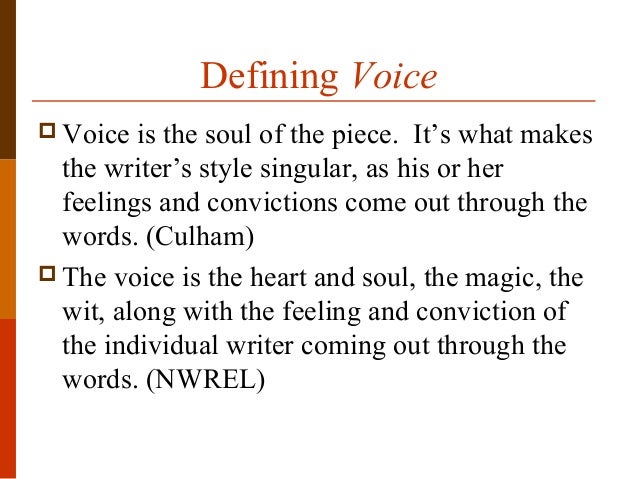
I also want to look at the concept in terms of literature. This comes from a website known as Literary Devices. It's pretty basic but it gives us what we are looking for:
A voice in literature is the form or a format through which narrators tell their stories. It is prominent when a writer places himself / herself into words and provides a sense the character is real person conveying a specific message the writer intends to convey. In simple words, it is an author’s individual writing style or point of view. When a writer engages personally with a topic, in fact, he imparts his personality to that piece of literature. This individual personality is different from other individual personalities, other writers put into their own works. Thus, voice is a unique personality of a literary work. Depending upon the type of work, authors may use a single voice, or multiple voices.
Now, when we look at these, we do see elements of the personality of the author coming through. In other words, if you write snarky prose, or if you write amazingly sensual romance, that will come through. But the key here is how it is done.
The author will "naturally" use specific words, phrases, combinations of both, sentence structure, a balance of narration and dialogue and so forth creating his or her unique voice. You have probably seen this when you pick up a piece of writing. If you read something by Nora Roberts, you know her voice. It isn't the plot structure or the character type, it is the voice. We can also see that her writing will be different from say a Brenda Novak novel. They can each write on the same topic, but their unique voice will make the writing unique.
The voice of the story really cannot be manufactured. This is one of those natural traits that comes out as you relax and just write. If we consider this outside of writing and think of swimmers, Michael Phelps has a unique (we'll call it voice) approach to his turns when he swims. He does what everyone else does, but that uniqueness comes across. If we hid his phase and you watched the turn, you could clearly be able to identify Phelps. It isn't something you can naturally teach someone.
As I read a submission, I can identify if that voice is strong enough to draw us into the full novel. We can really see this in the first several pages of a project. I should note, this is the reason why editors and agents don't need to read a full project to make that decision. That voice has to hook them early on. We can tell early on if that writer has the "voice" we are looking for. We can also tell if the author is trying to be something else with their writing.
Again, I think it is important to note that publishers are looking for authors who bring their own unique voice to the table. They may have specific plot or characters types they like, or even literary tropes they are drawn to, but the voice is what they are really looking for.
Tuesday, August 9, 2016
Don't Over-Work Your Wording and Sentences
We all want that perfect line in your stories. We want that great opening paragraph to draw the readers in. We want that perfect scene where the dialogue is amazing. And yes, this will occur. However, what you will find is that if you overly work those lines, if you wordsmith the story to death, the writing becomes forced.

As I was heading out to the grocery last night, I was listening to NPR and Terri Gross interviewing Colton Whitehead and his latest novel, UNDERGROUND RADIO. As I listened to Whitehead reading from his opening chapter, it felt as if he was trying really hard to make the perfect passage.
Now, I do understand this might simply be a personal preference in writing and something I am not a big fan of, but as I listened, the writing sounded forced and unnatural. Much of this came from a heavy emphasis of metaphors, similes and figurative language. When we use this approach and really push using that language, we depart from the way "normal" people talk in the real world.
As you think about your writing, think as if you are that character. Is your character likely to use those exact words you spent minutes formulating, or will that character just talk? Will that character describe the mountains he or she sees in the distance as a piece of artistic poetry, or simply just describe what the mountains look like.
I had the chance to sit in a workshop at a conference a while ago and listened to the speaker go into great detail of how all great authors intentionally incorporate all of these great literary devices and figurative language elements in their writing. They speaker went on to describe how writers should really strive to insert these same devices into their writing. The speaker stated that it was the use of the devices that make the writing great.
In reality, when we make the writing overly complicated and full of sentences that sound overly worked, the writing slows and we run the risk of really getting to the heart of the conflict and what the writers are going through.
Now, does this mean that we should completely eliminate all of the figurative language and not care about how the sentences and scenes sound. Absolutely not. It is for this same reason that we do not do like some authors try to proclaim, of writing without adjectives and adverbs, or writing only in active voice and not passive voice. We write what is natural for the characters, for the moment, and for the voice of the story.
Yes, read your story out loud! Yes, make sure that passage sounds great. But also understand the story must be something people will want to read. They don't want to sit there and read a single sentence and then linger over that sentence the entire day/
As I was heading out to the grocery last night, I was listening to NPR and Terri Gross interviewing Colton Whitehead and his latest novel, UNDERGROUND RADIO. As I listened to Whitehead reading from his opening chapter, it felt as if he was trying really hard to make the perfect passage.
Now, I do understand this might simply be a personal preference in writing and something I am not a big fan of, but as I listened, the writing sounded forced and unnatural. Much of this came from a heavy emphasis of metaphors, similes and figurative language. When we use this approach and really push using that language, we depart from the way "normal" people talk in the real world.
As you think about your writing, think as if you are that character. Is your character likely to use those exact words you spent minutes formulating, or will that character just talk? Will that character describe the mountains he or she sees in the distance as a piece of artistic poetry, or simply just describe what the mountains look like.
I had the chance to sit in a workshop at a conference a while ago and listened to the speaker go into great detail of how all great authors intentionally incorporate all of these great literary devices and figurative language elements in their writing. They speaker went on to describe how writers should really strive to insert these same devices into their writing. The speaker stated that it was the use of the devices that make the writing great.
In reality, when we make the writing overly complicated and full of sentences that sound overly worked, the writing slows and we run the risk of really getting to the heart of the conflict and what the writers are going through.
Now, does this mean that we should completely eliminate all of the figurative language and not care about how the sentences and scenes sound. Absolutely not. It is for this same reason that we do not do like some authors try to proclaim, of writing without adjectives and adverbs, or writing only in active voice and not passive voice. We write what is natural for the characters, for the moment, and for the voice of the story.
Yes, read your story out loud! Yes, make sure that passage sounds great. But also understand the story must be something people will want to read. They don't want to sit there and read a single sentence and then linger over that sentence the entire day/
Thursday, July 21, 2016
Selling Your Voice
I am finding myself spending a lot of time lately talking about submissions and pitches. Maybe it is that time of the year, or maybe my brain just happens to be heading that direction. Regardless of the reason, I want to spend some time today to talk about the concept of voice. More importantly, how do you do convey your personal voice in your submissions to editor and agents?
As I noted yesterday, for most authors, when they pitch stories to editors and agents, whether it is in a live pitch or a submission, the focus tends to be very informational and mostly plot oriented. While part of this is true, and, it is important to focus on the facts and to keep it objective. However, it is still important to find a way to demonstrate what makes your voice unique. This is where so many authors mess up.
As we all know, every author has a unique voice. This is what you will end up "branding" as your voice to the publishers and certainly your readers. When someone picks up your book, they want to know what they are getting. At Greyhaus Literary Agency, when authors pick up a Lauri Robinson historical, they want the strong authentic feel of the west. When they pick up an Ann Lethbridge historical, they want the depth of history as well as unique characterizations. A Helen Lacey novel will always have characters involved with plots containing unexpected turns. A Bronwyn Scott novel will have the sensuality to make your toes curl.
When you think about all of your projects you have written, look for the trend in the voice. What seems to be a binding voice that appears in all. You will note, I am not saying things such as theme or plot. Along the same lines, we are not using terms such as "sweet romance." This tells us nothing. We are looking for that voice which your readers will be known for.
At this point, some of you may be worried. "But Scott, you said think of all of your projects? I only have one!" That's right! Your voice develops over time. As you are thinking about submitting that first novel, you should be well on the way writing your next one and have several others planned out. This should be enough for you to see that voice developing.
I should also say that you can't necessarily create a voice. Your voice is unique to you. Trying to be something you aren't will be difficult. For example, the odds of a Bronwyn Scott writing inspirational romances are highly unlikely. It is simply not her voice.
So, as you write your query letter or think about your pitch, what can you say about your writing. You can certainly say things such as "In my stories, I strive to bring a [insert description] feel to my stories." or "Writers can expect X when they pick up one of my stories."
Now, go out and play around with this today!
As I noted yesterday, for most authors, when they pitch stories to editors and agents, whether it is in a live pitch or a submission, the focus tends to be very informational and mostly plot oriented. While part of this is true, and, it is important to focus on the facts and to keep it objective. However, it is still important to find a way to demonstrate what makes your voice unique. This is where so many authors mess up.
As we all know, every author has a unique voice. This is what you will end up "branding" as your voice to the publishers and certainly your readers. When someone picks up your book, they want to know what they are getting. At Greyhaus Literary Agency, when authors pick up a Lauri Robinson historical, they want the strong authentic feel of the west. When they pick up an Ann Lethbridge historical, they want the depth of history as well as unique characterizations. A Helen Lacey novel will always have characters involved with plots containing unexpected turns. A Bronwyn Scott novel will have the sensuality to make your toes curl.
When you think about all of your projects you have written, look for the trend in the voice. What seems to be a binding voice that appears in all. You will note, I am not saying things such as theme or plot. Along the same lines, we are not using terms such as "sweet romance." This tells us nothing. We are looking for that voice which your readers will be known for.
At this point, some of you may be worried. "But Scott, you said think of all of your projects? I only have one!" That's right! Your voice develops over time. As you are thinking about submitting that first novel, you should be well on the way writing your next one and have several others planned out. This should be enough for you to see that voice developing.
I should also say that you can't necessarily create a voice. Your voice is unique to you. Trying to be something you aren't will be difficult. For example, the odds of a Bronwyn Scott writing inspirational romances are highly unlikely. It is simply not her voice.
So, as you write your query letter or think about your pitch, what can you say about your writing. You can certainly say things such as "In my stories, I strive to bring a [insert description] feel to my stories." or "Writers can expect X when they pick up one of my stories."
Now, go out and play around with this today!
Tuesday, December 8, 2015
Understanding Voice
The voice of a story is often a difficult skill to teach. In fact, this is one of those elements of a story that just comes along naturally. You either get it, or you don't. This does not mean that a writer cannot figure it out over time. It is possible. And, since it can't really be taught, I will take today to "talk around it."
The voice of a story is simply how it sounds. This is not to be confused by your own personal voice, or your image. The voice involves things such as sentence structure, pacing, word choice, paragraph length and structure and so forth. If the voice of a story really works, everything is going to flow together smoothly. In many ways, it is similar to making a great meal that was really complicated to put together - a lot of spices and so forth. When you take a bite, all of those flavors just burst together. Think Ratatouille:

Another example would be learning a foreign language. You can take 3 or 4 years of a foreign language and yet the voice is not there. It is the feel of the words that truly gets you to the fluent stage.
Too often, authors are so obsessed with fine tuning a character, or getting the right phrasing down, that the voice is often ruined.
I just passed on a project where the author had a great premise and yet the voice was not there. As I read the story, I felt as if she was trying so hard to create the perfect phrase, the perfect image, and the perfect mood. While these passages were beautiful, "the voice" simply did not work with the story.
The voice of a story also varies from one publisher to the next. I have spoken about this here before. When we talk about what one publisher likes will differ from the other publisher, this is often due to the voice of the story and not the plot, character type or word count. This is also a key difference between stories that are considered "category" or "series" versus a "single title feel."
Right now, I am seeing so many authors just writing words on a page and not really thinking about "how it sounds" or "how it flows off the page." Essentially, these authors are hearing the story they feel they are telling, but it is all in their minds. What they have written and what they are personally perceiving is not quite there.
It is also for this reason that editors and agents ask to see the writing after a pitch session or an initial query. What you tell us your story is about is one thing. How it reads is completely different. I will say, the majority of time, if I have requested a to see more of a project, the issue often comes down to voice.
To get to an understanding of voice takes time. It takes a lot of dissection of novels. Reading those that you like and then watching carefully how the author is doing something different from the other authors out there. Study it. You might surprise yourself.
And, because it does take time, do not expect to figure it out today. Give it several months. You will figure it out.
The voice of a story is simply how it sounds. This is not to be confused by your own personal voice, or your image. The voice involves things such as sentence structure, pacing, word choice, paragraph length and structure and so forth. If the voice of a story really works, everything is going to flow together smoothly. In many ways, it is similar to making a great meal that was really complicated to put together - a lot of spices and so forth. When you take a bite, all of those flavors just burst together. Think Ratatouille:
Another example would be learning a foreign language. You can take 3 or 4 years of a foreign language and yet the voice is not there. It is the feel of the words that truly gets you to the fluent stage.
Too often, authors are so obsessed with fine tuning a character, or getting the right phrasing down, that the voice is often ruined.
I just passed on a project where the author had a great premise and yet the voice was not there. As I read the story, I felt as if she was trying so hard to create the perfect phrase, the perfect image, and the perfect mood. While these passages were beautiful, "the voice" simply did not work with the story.
The voice of a story also varies from one publisher to the next. I have spoken about this here before. When we talk about what one publisher likes will differ from the other publisher, this is often due to the voice of the story and not the plot, character type or word count. This is also a key difference between stories that are considered "category" or "series" versus a "single title feel."
Right now, I am seeing so many authors just writing words on a page and not really thinking about "how it sounds" or "how it flows off the page." Essentially, these authors are hearing the story they feel they are telling, but it is all in their minds. What they have written and what they are personally perceiving is not quite there.
It is also for this reason that editors and agents ask to see the writing after a pitch session or an initial query. What you tell us your story is about is one thing. How it reads is completely different. I will say, the majority of time, if I have requested a to see more of a project, the issue often comes down to voice.
To get to an understanding of voice takes time. It takes a lot of dissection of novels. Reading those that you like and then watching carefully how the author is doing something different from the other authors out there. Study it. You might surprise yourself.
And, because it does take time, do not expect to figure it out today. Give it several months. You will figure it out.
Monday, August 17, 2015
Find Your Story To Tell
There are many writers out there who have taken the self-publishing approach, not just because of the money, but because they have felt that writing for an established publisher will "limit their personal writing style." They feel that to write for a publisher (or even to have an agent) they will be forced to write stories that aren't truly representative of who they are or how they write.
This idea seems to come from pretty detailed descriptions of what we are looking for in our submission guidelines. This also comes from comments the editors and agents say during those panel discussions. "Read what we publish/represent to know what we are looking for." The problem is that many of the authors out there are misinterpreting what we mean by those comments, or even the submission guidelines.
In no way are we looking for someone to simply copy what we are publishing or representing. And those submission guidelines and descriptions of the particular genres are simply parameters to work with. It might be word count, it might be the level of sensuality. But that is it. From that point, it is entirely up to you as to what you want to write about.
Let's take my submission guidelines for women's fiction.
From this description, you can see that writers have a lot of flexibility. We start with word count. There is a huge range here to work with so this should not be an issue. If you are below that word count, is this for you? Probably not.
Now, look at the things I am asking for. These are stories that "examine the world through a woman's eyes." In other words, the story should have the focus of giving us a perspective of how women think and live in the world, of how they deal with issues and complex situations.
You will also notice that I am not looking for stories with a soap opera feel. I want the stories to tackle one issue and theme. Don't over load me with stories where the women have more issues than you would find in the offices of a counseling center.
Even the ending is up to you.
The only thing I openly stress is to not have a story with adultery.
What you should see is that there is no limit. You CAN find your own story to tell.
Now, I want to take this to a second level. If you are a new author just starting up in this business, take the time to explore and figure out what you personally write. Sure, you can play around with styles from other publishers, but the starting point will always be and should always be what you want to write. Once the story is done, THEN you can see who out there might represent your work.
I think the nice thing to remember is that the world of publishing has a lot of different avenues authors can take. It is always up to you which road you want to travel on and what stories you want to write.
This idea seems to come from pretty detailed descriptions of what we are looking for in our submission guidelines. This also comes from comments the editors and agents say during those panel discussions. "Read what we publish/represent to know what we are looking for." The problem is that many of the authors out there are misinterpreting what we mean by those comments, or even the submission guidelines.
In no way are we looking for someone to simply copy what we are publishing or representing. And those submission guidelines and descriptions of the particular genres are simply parameters to work with. It might be word count, it might be the level of sensuality. But that is it. From that point, it is entirely up to you as to what you want to write about.
Let's take my submission guidelines for women's fiction.
SINGLE TITLE WOMEN'S FICTION
Word count 75,000 - 110,000
I am actively looking for "book club" style women's
fiction pieces. These stories should examine the world through a woman's eyes.
We want to see what it means to be a woman. Stories can be historical or
contemporary but the focus must be on the female journey.
Please focus on one issue and not a ton of personal problems the
protagonist has.
Stories can have happy or sad endings.
Please no adultery.
From this description, you can see that writers have a lot of flexibility. We start with word count. There is a huge range here to work with so this should not be an issue. If you are below that word count, is this for you? Probably not.
Now, look at the things I am asking for. These are stories that "examine the world through a woman's eyes." In other words, the story should have the focus of giving us a perspective of how women think and live in the world, of how they deal with issues and complex situations.
You will also notice that I am not looking for stories with a soap opera feel. I want the stories to tackle one issue and theme. Don't over load me with stories where the women have more issues than you would find in the offices of a counseling center.
Even the ending is up to you.
The only thing I openly stress is to not have a story with adultery.
What you should see is that there is no limit. You CAN find your own story to tell.
Now, I want to take this to a second level. If you are a new author just starting up in this business, take the time to explore and figure out what you personally write. Sure, you can play around with styles from other publishers, but the starting point will always be and should always be what you want to write. Once the story is done, THEN you can see who out there might represent your work.
I think the nice thing to remember is that the world of publishing has a lot of different avenues authors can take. It is always up to you which road you want to travel on and what stories you want to write.
Wednesday, September 3, 2014
Finding Your Style And Your Voice
I frequently hear writers tell me their fear of writing for a traditional market, especially one such as a category or series line is that they "won't be able to showcase their own voice." There is a belief that if you are "forced into a mold" you lose out on that "uniqueness" of your own writing. This couldn't be further from the truth. It is still very possible to maintain your own unique voice and still meet the needs of a publisher or their given line. It just takes time to do so.
 When I talk to authors about voice and style, I often like to take them outside of the realms of writing and look into other fields. Here in Seattle, the music scene is pretty dang big. Back in August of 1991, a fellow classmate of mine by the name of Dave Krusen was part of a group that helped to
guide the Seattle music scene into the forefront of the world. With the release of a small little album entitled TEN, a local group by the name of Pearl Jam was now out there! I mention Pearl Jam here because at that time, there were a lot of other groups starting up and doing much of the same thing. Nirvana releases SMELLS LIKE TEEN SPIRIT the same year.
Both of these groups (as well as many others) were all grouped into the same genre, but when you look at the lyrics, the tone, the voice and the style, each is completely unique. In no way did they lose their voice and style by being part of a specific genre.
We see the same thing with artists, architects and so forth. Each can be part of a larger scheme and still maintain that uniqueness. This, however, is not something that is going to happen over night. Finding that unique voice is going to take time. According to David Starkey, author of CREATIVE WRITING: FOUR GENRES IN BRIEF, he reminds authors " that developing a distinctive individual style is a process that occurs over a long period of time; it generally doesn't happen during a single creative writing course" (or in this case one book you may write.
I think it is important to note he uses the term "developing" and the title of this post uses the word "finding". A personal voice and style is not something you sit down and create out of the blue. Authors do not sit down and say, "I am going to be an author who is known for writing romances with a truly American feel." Although it would be great to do so, that voice and style doesn't happen that way. You will end up discovering that voice as you write and find yourself comfortable with certain plot devices and plot lines. You will find yourself returning more often than not to certain techniques in your writing as you craft your stories.
In many ways, finding that voice is similar to people getting nicknames. Babe Ruth did not sit down one day and suddenly create that name for himself. It developed over time. The same goes for all of those other nicknames we call people. The nickname grew organically from the things the person said or the way a person acted.
The key to finding that voice is to just pay attention to what you are doing. Don't force things to happen, just let the writing happen.
As an agent, this is something we do with authors during that "career building" part of our working relationship. And yes, your publishers will do the same thing for you. We take something that is in your writing and slowly shape and mold it. We aren't turning you into something you aren't. We are simply discovering in you that voice and style that was hidden away.
 When I talk to authors about voice and style, I often like to take them outside of the realms of writing and look into other fields. Here in Seattle, the music scene is pretty dang big. Back in August of 1991, a fellow classmate of mine by the name of Dave Krusen was part of a group that helped to
 guide the Seattle music scene into the forefront of the world. With the release of a small little album entitled TEN, a local group by the name of Pearl Jam was now out there! I mention Pearl Jam here because at that time, there were a lot of other groups starting up and doing much of the same thing. Nirvana releases SMELLS LIKE TEEN SPIRIT the same year.
Both of these groups (as well as many others) were all grouped into the same genre, but when you look at the lyrics, the tone, the voice and the style, each is completely unique. In no way did they lose their voice and style by being part of a specific genre.
We see the same thing with artists, architects and so forth. Each can be part of a larger scheme and still maintain that uniqueness. This, however, is not something that is going to happen over night. Finding that unique voice is going to take time. According to David Starkey, author of CREATIVE WRITING: FOUR GENRES IN BRIEF, he reminds authors " that developing a distinctive individual style is a process that occurs over a long period of time; it generally doesn't happen during a single creative writing course" (or in this case one book you may write.
I think it is important to note he uses the term "developing" and the title of this post uses the word "finding". A personal voice and style is not something you sit down and create out of the blue. Authors do not sit down and say, "I am going to be an author who is known for writing romances with a truly American feel." Although it would be great to do so, that voice and style doesn't happen that way. You will end up discovering that voice as you write and find yourself comfortable with certain plot devices and plot lines. You will find yourself returning more often than not to certain techniques in your writing as you craft your stories.
In many ways, finding that voice is similar to people getting nicknames. Babe Ruth did not sit down one day and suddenly create that name for himself. It developed over time. The same goes for all of those other nicknames we call people. The nickname grew organically from the things the person said or the way a person acted.
The key to finding that voice is to just pay attention to what you are doing. Don't force things to happen, just let the writing happen.
As an agent, this is something we do with authors during that "career building" part of our working relationship. And yes, your publishers will do the same thing for you. We take something that is in your writing and slowly shape and mold it. We aren't turning you into something you aren't. We are simply discovering in you that voice and style that was hidden away.
Friday, April 18, 2014
3rd Person? 1st Person? Which Way Is Best? - Question from a Writer
Can changing from third person pov to first
person pov help improve voice? Recently I wrote in first person and feedback
was great voice. The manuscript I am trying to get agented and published is in
third person. In your opinion will changing the tense help the voice?
This is a great question and one I am sure a lot of writers deal with. Of course, like everything else in publishing, there really isn't one right answer.
Personally, I am of the opinion that first person is really a difficult voice to write in. I know a lot of authors take this approach, but I think it is simply because they can hear the voices of the characters better. Essentially when you take that first person approach, you are working with dialogue. But here is the real struggle. By writing in first person, you are eliminating all of that narration and world building that you would see in third person. You have to rely on the characters telling us what is going on and all of that back story. the hard part here is making it sound natural and nor forced.
The shift from first to third doesn't really help the voice of the story, it just brings in more of that narration and introspection. This approach just gives the reader a clearer sense of who the character is and what the character is thinking.
I think the real answer here is not whether or not it will add more to the voice or enhance the voice. The real answer is what works best for the actual story. Remember that the story and the plot dictate the approach you take. You don't start off saying you are going to write in first person and then figure out the story.
I would also add that publishers and agents are not going to reject a story because it is in first or third person. The story will be looked at for the merit of the writing and the concept. Of course, with that said, you should really examine the line, the publisher, the editor and/or the agent to see what their likes and dislikes are. For example, I am not against first person, but I do believe it is harder to write. that would determine if your story has the strength in premise, voice and style for what I am looking for.
Hope that helps?
This is a great question and one I am sure a lot of writers deal with. Of course, like everything else in publishing, there really isn't one right answer.
Personally, I am of the opinion that first person is really a difficult voice to write in. I know a lot of authors take this approach, but I think it is simply because they can hear the voices of the characters better. Essentially when you take that first person approach, you are working with dialogue. But here is the real struggle. By writing in first person, you are eliminating all of that narration and world building that you would see in third person. You have to rely on the characters telling us what is going on and all of that back story. the hard part here is making it sound natural and nor forced.
The shift from first to third doesn't really help the voice of the story, it just brings in more of that narration and introspection. This approach just gives the reader a clearer sense of who the character is and what the character is thinking.
I think the real answer here is not whether or not it will add more to the voice or enhance the voice. The real answer is what works best for the actual story. Remember that the story and the plot dictate the approach you take. You don't start off saying you are going to write in first person and then figure out the story.
I would also add that publishers and agents are not going to reject a story because it is in first or third person. The story will be looked at for the merit of the writing and the concept. Of course, with that said, you should really examine the line, the publisher, the editor and/or the agent to see what their likes and dislikes are. For example, I am not against first person, but I do believe it is harder to write. that would determine if your story has the strength in premise, voice and style for what I am looking for.
Hope that helps?
Thursday, October 25, 2012
ABC's of Writing - (I)nvent Your Own Voice
Publishers frequently tell authors to "read what we publish." They do so to give the authors a chance to understand the voice of the publisher. I have actually talked about that a lot here on the blog. With that said, there are a lot of authors who miss this point and spend their time trying to figure out the storyline of what the publishers write. But then, here comes the big mistake... they treat it as a formula. The final result is simply a carbon copy of what is already out there.
The publishers don't want what they already have. They want something that has your unique storyline and style but is similar to the voice of the publisher. Again, let me remind you that when I am talking voice of the publisher, we are talking about the "sound" of the writing. Some publishers have a "lighter" tone and others have a more "literary fiction" feel.
Let me give you a great example of this one. One of my authors, Sharon Lathan, has been one of the lead authors with the Darcy series at Source Books. Now, while many would look at her stories as simply copying the original Jane Austen writing, a careful look at Sharon's writing would reveal something much more. When Jane Austen first wrote these stories, these were romances. Today, due to English Instructors and English Majors like myself, we have started calling this fiction and classical fiction.
In simple terms, historical fiction is a fictional story set in a historical context. This does not mean it has to be written about a REAL historical character and then fictionalized, although it can be. It is simply a fictionalized view of a historical time period. If it is historical women's fiction, then it is a view of a historical time period and/or even through the eyes of a woman. It is giving the reader a chance to understand the world through the lens of a woman. We want to know the female perspective on a historical time period. For it to be a historical romance, it is then a romance (this is the central story arc) but using the historical time period as a context.
I bring this up because there are many who believe that for a story to be historical fiction, it has to be about a real person. This couldn't be further from the truth. Author Harry Shaw notes that historical fiction "clarifies certain aspects of the history itself and of our situations as historical beings."
Now, let's return to Sharon's stories. Sharon has created a fantastic blend now writing what we call "historical fiction" and yes, we can even call these stories "historical romance". She has invented herself by using the stylistic elements of Austen but bringing it into the historical romance and historical women's fiction market. Her newest story truly is a historical fiction. Yes, there is a character that is connected to the Darcy line, but since the focus of the story is understanding George and his place in the historical context, it becomes historical fiction.
I bring all of this up with Sharon to demonstrate something crucial here. You know how your writing sounds. Work with that and bring that to the forefront but blend it with the style and the genre of your publisher.
Scott
The publishers don't want what they already have. They want something that has your unique storyline and style but is similar to the voice of the publisher. Again, let me remind you that when I am talking voice of the publisher, we are talking about the "sound" of the writing. Some publishers have a "lighter" tone and others have a more "literary fiction" feel.
Let me give you a great example of this one. One of my authors, Sharon Lathan, has been one of the lead authors with the Darcy series at Source Books. Now, while many would look at her stories as simply copying the original Jane Austen writing, a careful look at Sharon's writing would reveal something much more. When Jane Austen first wrote these stories, these were romances. Today, due to English Instructors and English Majors like myself, we have started calling this fiction and classical fiction.
In simple terms, historical fiction is a fictional story set in a historical context. This does not mean it has to be written about a REAL historical character and then fictionalized, although it can be. It is simply a fictionalized view of a historical time period. If it is historical women's fiction, then it is a view of a historical time period and/or even through the eyes of a woman. It is giving the reader a chance to understand the world through the lens of a woman. We want to know the female perspective on a historical time period. For it to be a historical romance, it is then a romance (this is the central story arc) but using the historical time period as a context.
I bring this up because there are many who believe that for a story to be historical fiction, it has to be about a real person. This couldn't be further from the truth. Author Harry Shaw notes that historical fiction "clarifies certain aspects of the history itself and of our situations as historical beings."
Now, let's return to Sharon's stories. Sharon has created a fantastic blend now writing what we call "historical fiction" and yes, we can even call these stories "historical romance". She has invented herself by using the stylistic elements of Austen but bringing it into the historical romance and historical women's fiction market. Her newest story truly is a historical fiction. Yes, there is a character that is connected to the Darcy line, but since the focus of the story is understanding George and his place in the historical context, it becomes historical fiction.
I bring all of this up with Sharon to demonstrate something crucial here. You know how your writing sounds. Work with that and bring that to the forefront but blend it with the style and the genre of your publisher.
Scott
Friday, June 1, 2012
What I Look For In A Story - Writing Style
We have spent this week looking at some of the elements I look for in a submission. This last one is a bit more abstract but still has a huge impact on our decision of whether or not we progress with a project. This has to do with the actual writing style of the author.
As we have discussed here in prior posts, writing style is not a formula. In no way are we saying that there has to be one approved format for writing any story. What we focus on here is the ability of the author to really tell a story and to get that point across in the best format possible. That could be 1st person or 3rd person. It could be diary format or straight-up narration. It doesn't really matter.
When I look at a piece of writing, I am really looking to see how well the story reads. Since we are looking at these stories from an entertainment standpoint, we want a story that really flows off of the page and is easily accessible to the readers. No this doesn't mean you have to dumb down the story for the readers, but we should be able to see how the words flow.
One thing in particular that tends to be a sign that the writer is not quite ready to move on is when the writing is forced. In other words, the writer is taking the time to use specific writing devices, but everything seems to be a bit mechanical. We have to remember that great writers out there naturally use these skills. They know when to put in the correct dialogue tags and when to ignore those tags. They know when to dump information and when to withold it.
I often see writers submitting stories that clearly appear to be a result of a recent workshop. Frequently I joke that I know just the workshop or handout the person used to compose that piece of writing. This is also something we see in query letters or synpopses. The point is to let the story do the talking and not the devices the person uses.
If you think of actors in this case, you know what I am talking about. There are some actors that seem to flow effortlessly through their lines and on the stage. Others really struggle. I have done a lot of work with community theatre productions and you really see it when someone is trying to perform plays by Shakespeare. Sure, they have the lines figured out, and sure, they have the costumes and moves on the stage, but something just doesn't work. In simple terms, they really don't know what they are saying.
Another thing I look for is whether or not the writing has a single title or a category voice to the story. It is this reason that I can make many decisions based on the first 3-5 pages. The difference between single title and category is not simply the word count. It really stems from the voice of the story.
Hopefully this week you have had a chance to really see some of the things we look for in a story. I simply cannot stress this enough. It is all subjective and yes, there are a lot of variables to consider. What works for one story doesn't necessarily work for another.
Scott
As we have discussed here in prior posts, writing style is not a formula. In no way are we saying that there has to be one approved format for writing any story. What we focus on here is the ability of the author to really tell a story and to get that point across in the best format possible. That could be 1st person or 3rd person. It could be diary format or straight-up narration. It doesn't really matter.
When I look at a piece of writing, I am really looking to see how well the story reads. Since we are looking at these stories from an entertainment standpoint, we want a story that really flows off of the page and is easily accessible to the readers. No this doesn't mean you have to dumb down the story for the readers, but we should be able to see how the words flow.
One thing in particular that tends to be a sign that the writer is not quite ready to move on is when the writing is forced. In other words, the writer is taking the time to use specific writing devices, but everything seems to be a bit mechanical. We have to remember that great writers out there naturally use these skills. They know when to put in the correct dialogue tags and when to ignore those tags. They know when to dump information and when to withold it.
I often see writers submitting stories that clearly appear to be a result of a recent workshop. Frequently I joke that I know just the workshop or handout the person used to compose that piece of writing. This is also something we see in query letters or synpopses. The point is to let the story do the talking and not the devices the person uses.
If you think of actors in this case, you know what I am talking about. There are some actors that seem to flow effortlessly through their lines and on the stage. Others really struggle. I have done a lot of work with community theatre productions and you really see it when someone is trying to perform plays by Shakespeare. Sure, they have the lines figured out, and sure, they have the costumes and moves on the stage, but something just doesn't work. In simple terms, they really don't know what they are saying.
Another thing I look for is whether or not the writing has a single title or a category voice to the story. It is this reason that I can make many decisions based on the first 3-5 pages. The difference between single title and category is not simply the word count. It really stems from the voice of the story.
Hopefully this week you have had a chance to really see some of the things we look for in a story. I simply cannot stress this enough. It is all subjective and yes, there are a lot of variables to consider. What works for one story doesn't necessarily work for another.
Scott
Thursday, March 8, 2012
"Read What We Publish" - Understanding what editors really mean
Time and time again, writers are told by editors (and yes, agents in some cases) to "red what we publish to know what we are looking for." I know that when I first started, I was probably as frustrated as many of you when I heard this statement. But I caught on quick and realized that this statement is the best approach for figuring out what ticks in the books of your favorite authors and publishers. Unfortunately, I do believe that many authors are missing the point and looking at the wrong things.
When we ask you to read those books, we don't want you out looking at plots, characters and settings. While these are certainly important elements and you shouldn't ignore these ideas, you are really missing the point. What you should be looking for is "the voice" of the authors. Look for the common trends and threads you see flowing through these books.
The voice of these stories stems from a number of different things. Grammatically, you can look at sentence length, use of vocabulary, sentence structure and word choice. This tells you a lot about the style the publisher tends to use with their stories.
But, take it a step further. Look at the use of narration and dialogue. What material is included in these portions of the story? Take it a step further and examine when and how they use the material. Even the level of information that you see showing up in these elements. Some publishers tend to have a more literary feel to them while others tend to have more of a mass market feel. This is also how you can find that "category" voice that you frequently hear people speak of. (I don't want to go heavily into this right now).
As I said though, many authors tend to just copy the plots and character types that we see over and over again. The end result of this approach is simple. Editors and agents simply see this as nothing unique. You may have mastered that storyline, but, in the end, you haven't given us anything new to chew on.
I should also note that when you read these stories, I recommend the following approaches:
You might surprise yourself with what you find. The keys to these publishers are right in front of you. All you have to do is look.
When we ask you to read those books, we don't want you out looking at plots, characters and settings. While these are certainly important elements and you shouldn't ignore these ideas, you are really missing the point. What you should be looking for is "the voice" of the authors. Look for the common trends and threads you see flowing through these books.
The voice of these stories stems from a number of different things. Grammatically, you can look at sentence length, use of vocabulary, sentence structure and word choice. This tells you a lot about the style the publisher tends to use with their stories.
But, take it a step further. Look at the use of narration and dialogue. What material is included in these portions of the story? Take it a step further and examine when and how they use the material. Even the level of information that you see showing up in these elements. Some publishers tend to have a more literary feel to them while others tend to have more of a mass market feel. This is also how you can find that "category" voice that you frequently hear people speak of. (I don't want to go heavily into this right now).
As I said though, many authors tend to just copy the plots and character types that we see over and over again. The end result of this approach is simple. Editors and agents simply see this as nothing unique. You may have mastered that storyline, but, in the end, you haven't given us anything new to chew on.
I should also note that when you read these stories, I recommend the following approaches:
- Don't read the established authors that have been there for a while. The odds are they are doing things that fall outside the guidelines of the publisher. Remember though, they have sort of earned the right to deviate from the standard.
- Read authors that tend to be newer to the line, This gives you a bit of a clearer picture of the editing that is taking place behind the scenes. These authors are still working VERY close with their editors.
- Read different authors from the same editor. This variable will show you how the editor's decisions and choices have extended in different author voices.
- Look for patterns and trends. The more you read, you will see similar characteristics popping up.
You might surprise yourself with what you find. The keys to these publishers are right in front of you. All you have to do is look.
Friday, October 14, 2011
More On The Issue Of Voice
I recently had the chance to talk to a writer that I hadn't seen since the San Francisco RWA conference. At that first meeting, we had a chance to talk about the issue of voice and the uniqueness of voice with each publisher and agent. She firmly disagreed with me stating that voice couldn't be that different, and, in fact, when I mentioned one publisher that she was submitting a project to, I stated that the voice of that house was clearly not her story. Again, she disagreed.
In any case, I had bumped into her again. I found it interesting that, while she has shown some success (and I really stress SOME here) her career in publishing is really a huge plateau. Nothing amazing now and it is clear that there is nothing new on the horizon. At this new meeting, again the issue of voice came up. She is still a firm believer that voice doesn't change. I should note that she did not get signed with that other publisher. "The story just didn't fit what they were looking for." In this case though, the discussion of voice took on a new twist.
She proceeded to tell me that using one particular voice for historical romance could only yield a 140,000 word project and you could never write a traditional romance in less than that. In other words, the voice of the story dictated the word count.
This person clearly doesn't get it.
When we talk about the size of a story, we are discussing the plot line and the depth of character and plot development. Voice has absolutely nothing to do with the size of the story.
Voice is simply the sound of the story. The use of vocabulary, sentence construction, depth of figurative language and so forth. In the end, it is how the story reads if we hear it out loud. Each author has a unique voice and each publisher has a unique voice. The key in publishing is to find that right match. You will notice though, voice doesn't deal with how many words you put into a project.
The length of story comes from the level of complexity you add to your story. Add more characters, you need more room. Add more time during which the story takes place, you need more room. Add more sub-plots, you need more room.
Our conversation this time ended up the same way it did the last time. I had to simply say that we would have to agree to disagree, knowing that there was nothing that was going to change her mind. It is a shame though, because there are some things I very much like about her writing. She could have potential.
Of course, she did also mention that it was clear to her that Regency was not selling at all and the only thing that was selling in this time period was Master and Commander type books. Really? In the last 3 days, I have received countless Twitter posts of fantastic new Regency stories by USA Today and NYTimes best selling authors. Hmmm, I wonder where she gets those numbers from?
Oh well. Have a great weekend. It's swim season again so I'll be out officiating this weekend. Ahhh, the smell of chlorine!
Scott
In any case, I had bumped into her again. I found it interesting that, while she has shown some success (and I really stress SOME here) her career in publishing is really a huge plateau. Nothing amazing now and it is clear that there is nothing new on the horizon. At this new meeting, again the issue of voice came up. She is still a firm believer that voice doesn't change. I should note that she did not get signed with that other publisher. "The story just didn't fit what they were looking for." In this case though, the discussion of voice took on a new twist.
She proceeded to tell me that using one particular voice for historical romance could only yield a 140,000 word project and you could never write a traditional romance in less than that. In other words, the voice of the story dictated the word count.
This person clearly doesn't get it.
When we talk about the size of a story, we are discussing the plot line and the depth of character and plot development. Voice has absolutely nothing to do with the size of the story.
Voice is simply the sound of the story. The use of vocabulary, sentence construction, depth of figurative language and so forth. In the end, it is how the story reads if we hear it out loud. Each author has a unique voice and each publisher has a unique voice. The key in publishing is to find that right match. You will notice though, voice doesn't deal with how many words you put into a project.
The length of story comes from the level of complexity you add to your story. Add more characters, you need more room. Add more time during which the story takes place, you need more room. Add more sub-plots, you need more room.
Our conversation this time ended up the same way it did the last time. I had to simply say that we would have to agree to disagree, knowing that there was nothing that was going to change her mind. It is a shame though, because there are some things I very much like about her writing. She could have potential.
Of course, she did also mention that it was clear to her that Regency was not selling at all and the only thing that was selling in this time period was Master and Commander type books. Really? In the last 3 days, I have received countless Twitter posts of fantastic new Regency stories by USA Today and NYTimes best selling authors. Hmmm, I wonder where she gets those numbers from?
Oh well. Have a great weekend. It's swim season again so I'll be out officiating this weekend. Ahhh, the smell of chlorine!
Scott
Friday, June 24, 2011
Your Story Dictates the Strategy You Take
It is always interesting listening to writers talk about the right and wrong way to write a story. Topics range from the use of first person and third person, amount of dialogue, use of adjectives and adverbs, use of marquee names and so forth. These conversations always end up being a point of discussion when editors and agents meet with these authors. We hear things such as "Now, I'm using first person so will that be something that will cause editors to say no?" Ugh! Groan!
When we write a story (or for that matter any type of document) we do not sit down and say "I think I am going to write a first person story" first. We build the story from the foundational elements of a story - character, plot, setting and theme. Once we have an idea of what we want to accomplish in the story, then, and only then do we decide what the best mode of communication and structure will be. What is the best approach to take to make an effective story just shine.
I think too often, writers are obsessed with believing there is only one right and wrong way of doing things. This is far from the truth. There are certainly better ways and yes, you can have a great premise to a story but the execution of it by picking the wrong mode of communication will screw it up.
With that said, I do have to add something else. The correct mode of communcation for that story may not be your favorite or the one you are the most comfortable with. I hear a lot of writers say they prefer one method over another, but this doesn't mean it is right for the story. In fact, too often, this is really a huge reason for my passing on a project. The rejection reads something like, "While the premise is great the story ends up not being as strong as I had hoped. The voice of the story just does match with the storyline."
So, the next time you read your story and think something isn't quite right, don't immediately chance the plot. It might be time to consider HOW you are telling the story.
Scott
When we write a story (or for that matter any type of document) we do not sit down and say "I think I am going to write a first person story" first. We build the story from the foundational elements of a story - character, plot, setting and theme. Once we have an idea of what we want to accomplish in the story, then, and only then do we decide what the best mode of communication and structure will be. What is the best approach to take to make an effective story just shine.
I think too often, writers are obsessed with believing there is only one right and wrong way of doing things. This is far from the truth. There are certainly better ways and yes, you can have a great premise to a story but the execution of it by picking the wrong mode of communication will screw it up.
With that said, I do have to add something else. The correct mode of communcation for that story may not be your favorite or the one you are the most comfortable with. I hear a lot of writers say they prefer one method over another, but this doesn't mean it is right for the story. In fact, too often, this is really a huge reason for my passing on a project. The rejection reads something like, "While the premise is great the story ends up not being as strong as I had hoped. The voice of the story just does match with the storyline."
So, the next time you read your story and think something isn't quite right, don't immediately chance the plot. It might be time to consider HOW you are telling the story.
Scott
Monday, December 27, 2010
Writer's Laryngitis - Getting Your Voice Back Again
One of my writers of women's fiction has an amazing voice in her writing. In fact, it was really that voice appealed to me so much when I signed her last Christmas and it was the same voice that sold he book before in 11 days. In any case, we have been working on her next project and while talking to the editor about it, she was really luke warm about it. The story was O.K. but there was simply something missing. After 30 minutes of talking, we both figured out what it was. She had lost her voice.
When agents and editors are looking at books to sign, we are looking at several things. Obviously we have to determine if the story is right fo us. This is the plot and storyline. We also look at the marketability of the story. It may be great writing, but if the book isn't something we can sell appropriately, then we pass on it. One of the biggest elements we look for is a voice that stands out. We want something distinctive to help you stand out in this huge world. Think of some of the big guns out there in the romance and women's fiction genres: Nora Roberts, Janet Evonovich, Brenda Novak, Jo Beverly. When you pick up one of their books, there is a distinctive voice screaming at you. It is that "something different."
As a published author, that is also something we are looking for in each of your books. Editors and agents are looking for something that is consistant. We don't want a cookie cutter of your last book. We want a new story, but we want your same voice. Unfortunately, for many authors out there, losing their voices can mean a certain death for a writer.
So, let's return back to my author who was suffering from an accute case of writer's laryngitis. What did she do?
She sat down with the initial story and kept re-working it. She tweaked it, she turned it, she recrafted scenes.
But it didn't work.
She pulled out a blank sheet of paper and started over, coming at the story from a different angle.
But it didn't work.
The problem was simple. She was looking at the plot and trying to fix something that, at some level, didn't need to be fixed.
So she went back to her first book and read it. It was then she discovered the problem was her voice. That personality she had in the first book was just not there. In this new book, all she was doing was telling a story. It was nothing but words.
After writing over 10 new versions of the story, that new version WITH her voice had just what she needed. She had regained her voice and now the words are sailing through her fingers and onto the computer screen.
What is your voice? Do you really know it?
Scott
When agents and editors are looking at books to sign, we are looking at several things. Obviously we have to determine if the story is right fo us. This is the plot and storyline. We also look at the marketability of the story. It may be great writing, but if the book isn't something we can sell appropriately, then we pass on it. One of the biggest elements we look for is a voice that stands out. We want something distinctive to help you stand out in this huge world. Think of some of the big guns out there in the romance and women's fiction genres: Nora Roberts, Janet Evonovich, Brenda Novak, Jo Beverly. When you pick up one of their books, there is a distinctive voice screaming at you. It is that "something different."
As a published author, that is also something we are looking for in each of your books. Editors and agents are looking for something that is consistant. We don't want a cookie cutter of your last book. We want a new story, but we want your same voice. Unfortunately, for many authors out there, losing their voices can mean a certain death for a writer.
So, let's return back to my author who was suffering from an accute case of writer's laryngitis. What did she do?
She sat down with the initial story and kept re-working it. She tweaked it, she turned it, she recrafted scenes.
But it didn't work.
She pulled out a blank sheet of paper and started over, coming at the story from a different angle.
But it didn't work.
The problem was simple. She was looking at the plot and trying to fix something that, at some level, didn't need to be fixed.
So she went back to her first book and read it. It was then she discovered the problem was her voice. That personality she had in the first book was just not there. In this new book, all she was doing was telling a story. It was nothing but words.
After writing over 10 new versions of the story, that new version WITH her voice had just what she needed. She had regained her voice and now the words are sailing through her fingers and onto the computer screen.
What is your voice? Do you really know it?
Scott
Wednesday, April 21, 2010
Voice and Trends Don't Mix
As you know, I spend a great deal of time discussing why not to follow trends with your writing. In other words, why you should avoid jumping into a genre that you know very little about. I have told you time and time again, much of the reason really stems from your lack of understanding that genre enough to add those special twists and turns to the story to make it truly fit. But there is another reason.
Writing outside of your genre, working with something that is more of a trend than your personal taste will lead to a serious lack of voice in the story. Since your heart and passion is not really in it, you won't (and I know I will sound paranormal on this one) channel you spirit into the story.
When I read a submission, I can clearly tell if the writer was "into it" or not. Sure the words in the query might sound enthusiastic, but something in the writing was missing.
I have to say, I see this mostly in writers submitting YA's. Some of these people haven't been around this age group for a long time. Their kids are out of the home and all they have to work with is what they see on the media and The OC. This is not enough. You have to be able to tap into that unique voice and to do that, you have to be able to tap into your own personal voice.
Are you writing in the genre you do best, or the one that you just started due to a trend or a "nifty idea?"
For those of you that submitted questions to me and we didn't get to everything with the Blog Talk Radio Chat yesterday, I will get to those and you should see answers in tomorrow's blog.
Scott
Writing outside of your genre, working with something that is more of a trend than your personal taste will lead to a serious lack of voice in the story. Since your heart and passion is not really in it, you won't (and I know I will sound paranormal on this one) channel you spirit into the story.
When I read a submission, I can clearly tell if the writer was "into it" or not. Sure the words in the query might sound enthusiastic, but something in the writing was missing.
I have to say, I see this mostly in writers submitting YA's. Some of these people haven't been around this age group for a long time. Their kids are out of the home and all they have to work with is what they see on the media and The OC. This is not enough. You have to be able to tap into that unique voice and to do that, you have to be able to tap into your own personal voice.
Are you writing in the genre you do best, or the one that you just started due to a trend or a "nifty idea?"
For those of you that submitted questions to me and we didn't get to everything with the Blog Talk Radio Chat yesterday, I will get to those and you should see answers in tomorrow's blog.
Scott
Thursday, April 15, 2010
Tell a story from YOUR heart!
I was just reading this morning a short story ONLY DAUGHTER writtenr by Sandra Cisneros yesterday afternoon and it got me thinking about something I am finding missing in far too many stories today and certinly an even larger number of submissions I read. Cisneros has voice. Simply put, when I read this story in 21 paragraphs I get the sense a real person with emotions and feelings wrote this.
Now, some would say it was because the topic was personal, or it was written in first person and that makes a world of difference. But frankly, I beg to differ. As I read these words about her early life in a family of 6 brothers, it becomes clear she is passionate about her topic and really begs to reader to sit down for a few moments and listen to her story.
And here is the problem. Writers today, or at least those submitting to me (which I would hope is not the only case) seem to be more concerned with a great plot or characters that stand out. They overly stress the great bedroom scene between the hero and the heroine. The highlight the dramatic, tension filled scene when we are unsure if the hero will save the heroine. What is missing though is the talk about the story itself.
I think of the stories that stand out in my head and find myself not focusing on those minute elements of the story but the big picture.
Now, some would say it was because the topic was personal, or it was written in first person and that makes a world of difference. But frankly, I beg to differ. As I read these words about her early life in a family of 6 brothers, it becomes clear she is passionate about her topic and really begs to reader to sit down for a few moments and listen to her story.
And here is the problem. Writers today, or at least those submitting to me (which I would hope is not the only case) seem to be more concerned with a great plot or characters that stand out. They overly stress the great bedroom scene between the hero and the heroine. The highlight the dramatic, tension filled scene when we are unsure if the hero will save the heroine. What is missing though is the talk about the story itself.
I think of the stories that stand out in my head and find myself not focusing on those minute elements of the story but the big picture.
- Frances Mayes Under the Tuscan Sun an immersion into the everyday country-life of Italians.
- Bronwyn Scott Untamed Rogue, Scandalous Mistress Characters learning and loving in a world full of gender stereotypes
- Diana Gabaldon Outlander a love story spanning the test of time (literally)
- Michele Ann Young No Regrets characters understanding themselves and each other for who they are not what they are.
- Susan Edwards White Series deep and passionate stories bringing to light authentic Native American ideals.
If you are a writer and can only tell me the highlights of your story, then you are likely missing the voice we are looking for in those truly great stories. If you pick stories because of the action, you are likely missing it.
I should note in closing that this is not something you can make up. Going back after the fact to highlight that deeper meaning is not always that successful. You have to begin with it. You have to feel that passion and voice even before you put pen to paper.
Do you have the passion in your story?
Monday, March 8, 2010
Finding The Right Voice
I was reading through a YA this weekend on one of my small trips through the bookstore and I really struggled with it - enough that I didn't want to buy the book. It didn't hit me until much later that the reason I struggled with it didn't stem from the topic or the genre, it was simply the voice. The voice of the story just didn't fit with the storyline.
I don't care how unique the story is that a writer creates, or for that matter, how great the characters are, if the voice of the story is wrong, the whole thing is blown. To explain this a bit more, I went back to a model I have used when teaching writing.
According to the 6+1 Trait Writing Model, voice is defined as:
"Voice is the writer coming through the words, the sense that a real person is speaking to us and cares about the message. It is the heart and soul of the writing, the magic, the wit, the feeling, the life and breath. When the writer is engaged personally with the topic, he/she imparts a personal tone and flavor to the piece that is unmistakably his/hers alone. And it is that individual something–different from the mark of all other writers–that we call Voice."
I think the key here is that a real person is speaking to us. Remember that we are reading about human beings (or human like beings for you paranormal people) so we need to hear the voices that really fit with the story and the characters. If the author doesn't have a firm grasp on the genre, or even their characters, the voice may sound forced, or simply be wrong for the book.
For each genre, there is a unique language readers come to expect. Whether it is YA, regency or erotica, the wording is crucial to the story. But there is a bit more to this. You can't just insert the lanaguage and hope the story works. The voice and the tone has to be there as well.
When I started thinking about what to write here, the first thing that popped into my head were movies and specific actors I have seen that didn't quite work. For those of you that know me, I love Shakespeare. I love MUCH ADO ABOUT NOTHING, but I have to say, adding Keanu Reeves really didn't work. The lines were there and I do believe he was trying, but the tone and voice was just not there. What about HUNT FOR RED OCTOBER. I love the movie, I think Sean Connery is great, but we have all laughed at how a Russian Submarine Commander had a great Scottish accent. Huh?
The tone you create in your story comes from the way you craft the sentences and create the scenes. It comes from what you decide to focus on in the story and what the characters actually see and do, not simply from what they say. What sensory elements to you bring to the surface and which ones do you move to the back of the story. No, you don't get rid of the elements, just back off on the elements.
Let's talk YA for a second. While teens may focus on fashion and dating, this is not the voice that should be coming through. Teens act and say the things they do as they are working to discover who they really are and where they fit in the world. These other elements - the boyfriend, the prom, the car, and so forth - are simply extensions to what is really going through their heads. This is self discovery.
Take some time to really dissect some of your favorite authors. How do they create that right voice that is both unique to their story and more importantly, unique to their own personal style?
Scott
I don't care how unique the story is that a writer creates, or for that matter, how great the characters are, if the voice of the story is wrong, the whole thing is blown. To explain this a bit more, I went back to a model I have used when teaching writing.
According to the 6+1 Trait Writing Model, voice is defined as:
"Voice is the writer coming through the words, the sense that a real person is speaking to us and cares about the message. It is the heart and soul of the writing, the magic, the wit, the feeling, the life and breath. When the writer is engaged personally with the topic, he/she imparts a personal tone and flavor to the piece that is unmistakably his/hers alone. And it is that individual something–different from the mark of all other writers–that we call Voice."
I think the key here is that a real person is speaking to us. Remember that we are reading about human beings (or human like beings for you paranormal people) so we need to hear the voices that really fit with the story and the characters. If the author doesn't have a firm grasp on the genre, or even their characters, the voice may sound forced, or simply be wrong for the book.
For each genre, there is a unique language readers come to expect. Whether it is YA, regency or erotica, the wording is crucial to the story. But there is a bit more to this. You can't just insert the lanaguage and hope the story works. The voice and the tone has to be there as well.
When I started thinking about what to write here, the first thing that popped into my head were movies and specific actors I have seen that didn't quite work. For those of you that know me, I love Shakespeare. I love MUCH ADO ABOUT NOTHING, but I have to say, adding Keanu Reeves really didn't work. The lines were there and I do believe he was trying, but the tone and voice was just not there. What about HUNT FOR RED OCTOBER. I love the movie, I think Sean Connery is great, but we have all laughed at how a Russian Submarine Commander had a great Scottish accent. Huh?
The tone you create in your story comes from the way you craft the sentences and create the scenes. It comes from what you decide to focus on in the story and what the characters actually see and do, not simply from what they say. What sensory elements to you bring to the surface and which ones do you move to the back of the story. No, you don't get rid of the elements, just back off on the elements.
Let's talk YA for a second. While teens may focus on fashion and dating, this is not the voice that should be coming through. Teens act and say the things they do as they are working to discover who they really are and where they fit in the world. These other elements - the boyfriend, the prom, the car, and so forth - are simply extensions to what is really going through their heads. This is self discovery.
Take some time to really dissect some of your favorite authors. How do they create that right voice that is both unique to their story and more importantly, unique to their own personal style?
Scott
Subscribe to:
Posts (Atom)