Showing posts with label synopsis writing. Show all posts

Friday, July 25, 2025

Synopsis Writing Course!!!!! Winter 2026

 Just heard from my coordinator at UCLA Extension!

They want me to teach a 4 week long course with them on synopsis writing in Winter, 2026! Of course I said YES!!!!!

This will be totally asynchronous! Each week, the modules will open at 7 am Pacific time. All work for the week will be due the following Friday at 11:59 pm Pacific time. Each week you will have a discussion board on a small topic and a small writing activity, WITH feedback from me. At the end of the 4 weeks, you will have a full 3-5 page synopsis WITH feedback from me, for our novel.


SUCH A DEAL!!!!!


I'll get you more details later. Still, check out the UCLA Extension program for other opportunities. BTW, this will also be similar to the same program I will be running through my program here at Greyhaus!

Monday, March 11, 2019

Synopsis Writing Is Not That Hard Unless...

I saw a post last week on Twitter of another author complaining about synopsis writing, and of course she ended up getting a lot of similar reactions from other authors. We always hear writers complaining about how difficult synopsis writing is. But, here is the thing - synopsis writing is only hard if you have no idea what your story is about.

So, let's begin with the basics.

syn·op·sis
/səˈnäpsəs/
noun
  1. a brief summary or general survey of something.
    "a synopsis of the accident"
    synonyms:summary, precis, résumé, abstract, outline, condensation, digest, summarization, summing-up, rundown, roundup, abridgment, review, sketch, compendium;
    rareconspectus
    "a basic synopsis of the play"
    • an outline of the plot of a book, play, movie, or episode of a television show.

In simple terms, you are telling us what your story is about from page 1 to the end. You are just telling us about the central plot of the story. That's it. This is not meant to be a piece of creative writing. This is not meant to discuss all of the subplots or to introduce all of the characters. And, it is just this that causes most authors to struggle. They are trying to do too much.

We don't need to see every scene in the story so only focus on the main sections. Focus on who the characters are, their internal and external conflicts and how they eventually get out of their problems.

Of course there is also the other issue of writing a synopsis before you write the story. You will be expected to write a synopsis of your story as a proposal for your editors. Those of you who are "Pantsters" and feel that the best thing you  can do with your writing is to just "go with the flow" you will indeed struggle here. But I again remind you, we aren't looking for a chapter by chapter summary but one that focuses on all of the major points. Who are the characters? What is their conflict (both internal and external)? And, how will you end this story? What is the resolution.

the easiest thing you can do with a synopsis is think of telling your best friend what the story is about. That is it. Nothing more to it.

Tuesday, August 28, 2018

What We Want In A Synopsis

I know, the word synopsis strikes terror in so many of you. I don't know how many times I have heard authors say this. But, the synopsis IS a necessary evil and if you plan a career in publishing, you dang well better figure these things out.

Let me first say, before getting deeper into the synopsis writing, that most of you hate this simply because you are "winging it" with your story. You are those people who don't want to feel "tied down" and you "don't want to lose your voice." Let me say, that a synopsis and plotting out your story for a synopsis has nothing to do with your voice. It is simply a matter of knowing where your story is going to and what you intend to achieve. I always go back to a quote from a motivational speaker: "If you don't know where you are going, you will end up where you don't want to be." This is the purpose of a synopsis.

When an agent or editor reads a synopsis with the partial of your writing, we are seeing how the entire story is going to play out. We get a sense of your voice with your partial, but it is the full storyline we are looking for. We want to see that the conflict has a reasonable solution. We want to see how the characters are going to work through things.

Do we want every minute detail? No! This should make those of you who feel that your voice will be stifled feel much better.

So, what do we want?

We need the general plot arc. We want the basics:
  • Setting of the story
  • Who the characters are and their GMC (Goals, Motivations and Personal Conflicts)
  • How the characters meet
  • How they are introduced to conflict.
  • The "MAJOR" events they will have to go through
  • The conclusion of the story
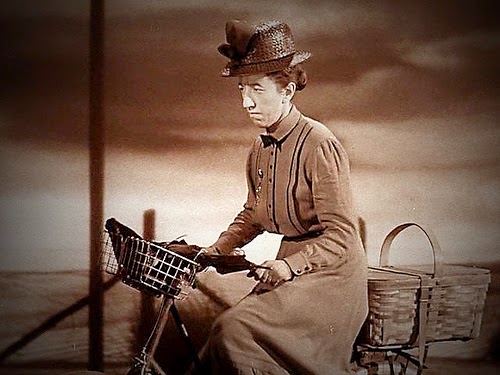
So, think about the Wizard of Oz. No, I am not going to give you a full written synopsis, but the
things we need to know:
  • Dorothy lives on a farm with Aunt and Uncle
  • Dorothy feels left out at farm
  • Dorothy's dog gets taken away by Elivira Gulch (Wicked Witch)
  • Dorothy runs away
  • Dorothy returns after seeing a traveling salesman (Wiz) and a tornado is on the way
  • Hits head and ends up in Oz
  • Finds out she has to travel to the city of Oz
  • Meets Glinda, Scarecrow, Tin Woodsman, and Cowardly Lion
  • Gets to Oz and finds out the only way home is to kill the witch
  • Goes to kill witch
  • Gets caught
  • Liquidates her
  • Returns to find out that she could have returned anytime she wanted
  • There's no place like home
We have a sense of the story. We don't need to know about skipping down the yellow brick road. We don't need to know about the songs. We just need the plot.

In reality a synopsis only needs to be about 3-5 pages, and yes, this is double-spaced. No, it does not need to be chapter by chapter. I have only ever met one publisher that took that approach.

Should this synopsis get into the voice of the characters? No. Should the synopsis be written by the characters. No. This is purely informational.

Not so hard, is it?


Tuesday, December 19, 2017

Keep Your Story Simple

I feel like I am always trying to get this point across to authors. Yesterday, however, an editor I was working with used a different explanation that made a lot of sense.

What we are talking about here are authors that make stories far too complicated than the stories need to be. They add sub-plots. They add a ton of external conflicts. They go over-board linking prior stories to the one they are working on, and then try to set up things that will happen in the next three books. Too much!

Now, while this does add depth and can work for some authors (primarily those writing large scale epic level novels, for the general novelist, this is over-kill. The issue now comes to play when the author is trying to market his or her story to agents, editors and book-buyers. You might be one of those people. Consider this...

Is your synopsis more than 5 pages in length?
Do you have to explain your story by telling the listener the backstory of how the plot came to be?
If you write historical, do you have to re-tell the entire historical period down to the exact dates of the events?
When you tell the story, do you also have to give us an in-depth understanding of the secondary characters and even those that only show up 2 or 3 times in the entire novel?

Then you probably have an issue.

So, what was the great explanation one of my favorite editors gave? She simply said that authors need to put themselves in the shoes of their editor. It is that person who is going to be responsible for drafting up the back cover copy. It is that person who is going to have to explain the story to the marketing team and the art department. It is that person who has to put together the publicity. To do so, your editor (and yes your agent has to do the same thing) has to have something short, simple and to the point. As she noted to me, that back cover copy has to be 75 words or less. And, for some of you out there, that is going to be tough.

Why does it have to be this way? Because it will be easier to remember. It will be easier to capture the essence of the story to show the uniqueness of the project when "selling" it to others.

As you get ready to start that new novel, you need to think of those 75 words. It has to be exact. It has to be to the point. I cannot be full of fluff and clichés such as "sparks flew when..." This is 75 words that have to tell us about the hero, the heroine, the conflict and their motivations. BAM!!!

This is not about word economy but a plotting issue. It is about getting to the point of the story, and then, when you start writing it, stick to it!

So, here is your challenge. Try it today... Try answering these simple questions and then blending it together:

  1. Title
  2. Word count
  3. Genre
  4. Tell us about the setting
  5. Tell us about the hero
  6. Tell us about the heroine
  7. Tell us about the conflict
  8. Tell us about their motivations
Now keep it to under 75 words.

Have fun!
Wednesday, July 13, 2016

A Synopsis Is Not Difficult To Write

I honestly don't understand what's the big deal, but so many writers out there run in terror when they are told to write a synopsis for their story. "It's soooo hard!!!!" they scream. Far too often, they sound like my kids when they are told to clean their rooms. But here is the real problem. The approach writers are taking when it comes to their synopsis writing is what makes this so hard.

First of all, let's define a synopsis. This is a short summary of your story.

That wasn't so hard, was it?

All that goes into a synopsis is the central story arc. Along the way, we need to know something about the main characters (not the secondary characters, the janitor and the old lady next door). We need to know what the conflict is and we need to know how it is resolved. We need the beginning, the middle and the end. That's it.

Where so many of you struggle is your attempt to include every scene and every last detail. Along the way, you are also trying so hard to show us your amazing creative writing ability. This is not needed. We will see your writing when we read the story.

The synopsis is simply used by editors, agents, art departments and business departments to get a full sense of the story without having to read the whole project. Don't worry, the editors and agents will read your whole story if they like it, or if they are working with it, but in those early stages, this is simply a summary. Think of it as an executive summary your bosses might present to their board of directors about a project that is happening in their company.

Think about writing your summary just like you would tell someone (like your crazy Aunt Maxine) what your story is about. She isn't likely going to read it, but wants to know what the story is about. You don't just say, "It's a murder mystery." The odds are, you tell her the plot.

That's what you put into it.

Keep it short, simple and to the point. Focus on the central story arc. Leave out the smaller points and you should be golden.


Thursday, January 21, 2016

How Much Goes Into A Synopsis

I know there are differing opinions on synopsis writing, but I am someone who believes in keeping it short and sweet. This is not because I know everyone hates writing a synopsis, or the fact that there are agents out there who claim they don't read the darn things. It is really about the purpose they serve in the submission process.

Whether you like it or not, you will be asked to write a synopsis for projects. Yes, there will be a time when you can simply toss an idea out to your editor and he or she will love it, but that will be a while down the road. So, with that said... suck it up and really work at writing these things.

I have always said that writing a synopsis is really not that hard. This is especially true when you understand the purpose of a synopsis.

In simple terms, the synopsis is there to tell us the central story arc. That's it. Nothing more. It is not there to tell us what your voice is. It is not there to go into detail on individual scenes. It is simply the story arc.And the purpose is simple. The odds are, if you are submitting a new project, we will only look at a partial to see your voice, but we want to know the rest of the story. This gives us a snap shot of whether or not the rest of the story will play out the way we want it to.

So what goes into that synopsis? Again, this is rather straightforward. We need:

  • The main story arc.
  • The main character(s)
    • Who they are
    • What drives them
    • What their goals are
    • What their internal conflict is
  • The central conflict of the story (which is likely summed up in the main story arc.
  • The conclusion
Where this becomes difficult for so many writers is the fact they keep "wanting to tell us more." I hear during pitches the same things. "To understand this, let me give you a little back story." We really don't need to see that. We are very clear there is going to be some back story for your characters. We fully understand that there will be friends who might be there for the characters. But they are not important.

For example, instead of telling us all about the back history of Gina, the next door neighbor who your main character goes to for advice every day, you can simply say, "Lois frequently talks to her friend who often guides here in what seems like the right direction but always ends up going wrong." That's it. Sure we will want to see how quirky Gina is WHEN we read the book, but until then, we don't need to know who she is.

If it is a romance, we know there is a pretty good chance they will hop into bed. That's fine, but going into detail of where, when and how good it was is not necessary. We are hoping if the hero is any good, then the time they spent in the hay loft was probably also pretty good.

The point is, keep it simple. Focus on the main plot and that is it. You should EASILY be able to sum up your plot in 3-5 pages. Just think beginning, middle and end. You will be fine. I promise.

Wednesday, November 20, 2013

What Should Your Synopsis Really Do?

I know all of you complain that you hate writing a synopsis, but this is a necessary evil and one that you better figure out soon. Not only will you need this for your initial queries to editors and agents, but you will also need it when you start submitting proposals to editors for future projects.

I do think, for the most part, that most writers make synopsis writing harder than it needs to be. So, with that in mind, it is time for a little bit of Synopsis Writing 101.

DEFINITION:   
 a short description of the contents of something such as a film or book

WHY:
Editors and agents use that synopsis to get an over-all view of the story arc. Since there are many times when we only request a partial of a story to get a sense of your writing and your voice, the synopsis is used to see how you plot out the rest of your story. The goal is to see if what you said your story was about in the query letter or the pitch really matches up with the story you have written.

When you are working with an editor or agent, the synopsis is used for future planning, marketing and so forth.

WHAT'S INCLUDED:
As the definition states, it is short description of something. With that in mind, the synopsis is simply that. It is an overview of the plot of your book. That is it. This is not a chance for you to demonstrate your creative writing ability or to insert dialogue from the book. It is simply a snapshot of your storyline.

Think of it this way. What if I were to ask you to tell me the plot of your story? What would you include?
  • You would highlight the setting. 
  • You would tell me who the character is (both biographically and as a "person).
  • You would tell me what this person does in the story.
  • You would mention the key elements of the plot.
  • You would mention the conflict of the story and potentially the internal conflict of the characters if it is DIRECTLY connected to the main storyline.
You would not spend the time getting into the introspection of the characters or discussing the secondary characters of the book. Along the same lines, you probably wouldn't spend the time getting into every single individual scene and even the characters were in. You focused on the big picture and the big parts of the story.

There also needs to be a beginning, middle and an end. I understand that with your readers, you don't want to give away the ending, but this is not the case with editors and agents. They need to know what happens in the story.

I always recommend going back to that basic chart we have seen time and time again regarding the plot of the story.
Hit these major points in the story and that is it!

The key to all of this is to keep it simple.

LENGTH:
In my humble opinion, you can probably do this in 3-5 double spaced pages. If you have a synopsis exceeding this, the odds are you are including too much information.

WHAT ABOUT A CHAPTER BY CHAPTER SYNOPSIS?
There are very few agents or editors who need to see this type. You will also find that this synopsis really is over-kill and starts to include far too much information.


If you want a great simple article on this, check on this blog post of Jane Friedman on this. Really good! http://janefriedman.com/2011/10/25/novel-synopsis/


Monday, July 12, 2010

Synopsis writing

A request from a writer wanted me to take the time to discuss synopsis writing. For me, I am always amazed at the struggled writers have with writing a synopsis. I honestly have to say, I see there being two reasons for this struggle. Either we have writers who are pantsters and really have no clue on their story, or, probably more common than not, the writers are making this harder than it seems to be.

Let's start with the idea of the synopsis. Simply put, it is a paragraph format outline of the story. In a short space, the writer tells the editor or agent what the story is about. That's it. Nothing more. A synopsis is not a chance to show us your voice, or your writing style. It is not a chance for you to be creative or witty, it is strictly information.

Editors and agents use a synopsis to get a clear picture of the central story arc. We want to see the beginning, middle and the end in a compact space. Often an editor or agent may start a story and see some hints at something worthwhile but then sometimes things start to fall apart. At that point they will grab that synopsis and see if the problem is the writing or the story. Sometimes we can spot a small bump in the road that could easily be fixed. If that is the case, then we might be willing to keep reading.

In my case, I always use the synopsis to see if the story is actually destined for success or not. Some people have great 250 word blurbs but the synopsis shows me the story might not have a direction, or it might be full of small scenes that are apparently there to just build the word count.

As far as a format goes, there is no one way of doing it. What is important is to get the main character and/or characters out there as soon as possible. Give the editor or agent a chance to see the GMC of each of the characters. The opening paragraphs are also designed to get that main story conflict out there as well as the world building and setting elements.

From that point on, you need to just give the reader the main plot elements that take the reader through the entire story, from the beginning to the end. We don't need to see all of the secondary characters, we don't need to see the details of all their smaller interactions. Just the main part.

If you struggle with this, take each of the chapters in your book and think about what the main thing is that happens in the story. Write a 1-2 sentence summary of that event. Now, start splicing it together.

Remember, the goal is to tell the story. Yes, there should be some fluency to all of this, but the real goal is to just tell the story.

Here is a sample synopsis for Bronwyn Scott's latest book UNTAMED ROGUE, SCANDALOUS MISTRESS.

Wild hearts are often the hardest to tame.

Crispin Ramsden’s always been wild. Not even a prolific military career changed that, and certainly no woman would. Crispin had no illusions about himself. He enjoyed the freedom to come and go as he pleased, to answer to nothing but the call to adventure. He only needed the clothes on his back and a good horse to be happy. The life he led held no room or appeal for a wife.

That was why he had left three years ago. Feeling smothered by his two brothers recent marriages (both of them love matches—egads!) and the expectation that he’d be the next to fall, Crisipin spent the intervening years actively avoiding his matrimonial fate in the near reaches of the British empire. Acting as an independent agent for the Crown, he dispensed valuable but quiet services where needed and when funds demanded it. Now, an inheritance from a distant relation finally lures him home with his prize possession in tow….an exquisite Arabian stallion cannily ‘won’ from a desert Chieftain who wouldn’t mind having it back.

Crispin doesn’t intend to stay---just long enough to settle the issue of the inheritance, see the growing brood of nieces and nephews and to race his Arabian. But fate and a woman conspire against him. In Aurora Calhoun, Crispin discovers a woman of exceptional character, a passion worth fighting for, and an unspoken dream realized.

A self made woman in a man-made world

Aurora Calhoun’s always been obstinate, outspoken, and in possession of an uncommon amount of sense when it comes to horses and men; not exactly the ideal attributes sought after by the marriage minded gentleman of London.

Not that she cares. A husband is the last thing she wants. After four years of hard work and hard won battles against gender stereotypes and prejudices, she’s finally established a small riding school for women in the Cotswolds—with no meager thanks to the Countess of Dursley whose sister, Petra Branscombe, is one of her leading students. Aurora doesn’t limit her teaching exclusively to equestrian technique. She’s determined to show her students how to apply their equine skills in their relationships with men. They might have come to her stables in order to learn how to look pretty sitting side saddle in a riding habit, but they’ll leave with understanding that there’s more to life than following in a man’s wake.

Unfortunately, while the patronesses of her establishment are grateful for the varied angles of Aurora’s ‘curriculum,’ the male portion of the neighborhood isn’t as accepting.
It’s one thing if the riding school is a harmless activity supported by the countess and her sister, it’s entirely another when Aurora’s teachings lead to dissension in the private homes of the district’s leading citizens who don’t appreciate the new found outspokenness of their daughters, wives and sweethearts. Things come to a head when one wealthy landowner’s daughter refuses an arranged marriage to a poverty-stricken peer.

A general uprising of a village’s male populace is no new event for Aurora. Sometimes, it’s effectively squelched. Other times, it hastens her departure to a new location. She’s moved several times already and this wouldn’t be the last even though she wishes this time it could be different. Thanks to Peyton Ramsden, the earl of Dursley, and his wife Tessa, she feels at home here. She’s even managed to acquire a few real friends. It would be a shame to leave, especially when it would mean leaving the perplexing and aggravating Crispin Ramsden behind.

By rights, she should despise him the most. From the day he arrives at her school and challenges her lesson on riding astride, to the constant battles of wit, he vexes her like no other. Yet, she’d be foolish to deny that the growing attraction between them is about more than acquiring his stallion as stud for her prize brood mare. They have more in common than Aurora finds comfortable and the desire that sizzles whenever they’re together is positively explosive and demanding—it will be appeased. But can she trust him?

Someone in the village has tipped her hand and let out the ‘real’ lessons advocated at her riding school. This time, Aurora has more than deflated male egos to contend with. This time, someone’s angry enough to extract revenge. The revenge starts simply enough with some minor thefts from the stable, and escalates to an attempt to injure Aurora. As the stakes rise, Aurora discovers there are limits to her abilities to ferret out the enemy. She needs a man with the ‘inside track’ to help identify her foe before irrevocable damage can be done. Can she trust Crispin to stand as her ally or is he the one guilty for giving away her secret? In private, they argue about her covert lessons in male management but when she is publicly threatened, Crispin unexpectedly stands up for her—with his fists.

Crispin stands her ally but it’s too late to save the stables. When a fire in the night claims Aurora’s livelihood and very nearly her life, it is Crispin who risks himself to pull her and the horses out of the flames. Aurora must finally decide if she’ll follow her usual pattern of moving on or if she’ll accept Crispin into her heart and stay by his side. Crispin has made her an honorable proposal of marriage (which was no doubt prompted by the tragedy of the fire, in Aurora’s mind) and shares her love of horses. His newly inherited estate is the perfect place for pursuing their dreams of a premiere equestrian center.

The decision seems simple on the surface, but it requires her to do the one thing she’s sworn never to do—give a man priority in her life. The passion that flares with Crispin is powerful and overwhelming. If she gives into it, it will, without question, change her. Dare she risk it? The wildest of hearts are the hardest ones to tame and the easiest ones to break.


Hope this helps!

Scott