Showing posts with label Trends. Show all posts

Monday, November 24, 2025

Where Do I Think Contemporary Romance Is Going?

OK, time to break out the Magic 8 Ball and take some guesses. 

And as you know, guessing trends in this business is something I believe we all wish we can do. It is that one question we are asked over and over again at conferences by all of you authors. "So what do you see as the next trend?" At that point, we all look at each other and pretty much squirm thinking, "There is no way I'm going to take that question."

Well, I'm going out on a limb here today. Let's talk about contemporary romance today. 

We have now had a ton of romantic comedies. We had a resurgence of what we used to call "chick lit" but now we thought we would just call it rom-con so we didn't make ourselves look old. OK, people kind of liked that because it was fun, light and certainly took our minds off of a lot of bad and negative things going on around us in the world. We sort of extended our "summer beach reads" to a full year long habit. 

Then that transformed into sports romances. People were all into the hot athletic guys. It wasn't about the sports. It was more about the fact that after the game, they had to take off those sweaty uniforms and the readers got to see their abs. Whew! And we still made these stories fun and light. Keep the rom-con feel and keep the fast beach read feel. 

And editor bought up these books like crazy. 

Now, here is where my prediction is coming into play. Editors bought and bought and bought, and now the readers out there are going to the bookstore, looking at the shelves and saying "these all look alike." Even worse, they have now turned all of the book covers (including historical romances) into those trade paperback cartoon covers so now literally EVERYTHING looks alike. 

And readers are seeing it. I went into my local Barnes and Noble and in the romance section I heard several readers say "there is nothing new" even though there were new debut authors. 

Editors are just trying to get these books out of their warehouses. 

So, where do I think things are going. I personally believe we are going to swing the pendulum a bit more to some more realistic romances. No, I am not talking about non-fiction stories where we just changed the names. I think we are going to see more stories that have people we could easily find as neighbors. Give them a good strong conflict to deal with (not just a cliche new neighbor storyline) but not something so over-the-top, but a good romance we could just get into.

And, by the way, we are going to dump all of the insanely heavy baggage stories where the heroine in the story is dealing with EVERY emotional drama of the 21st century and needs an entire hospital of psychologists to solve her problems. 

And I do think the covers are going to change too! (Oh please!!!!!)
Monday, June 16, 2025

Writing What's Trending Now May Be A Mistake

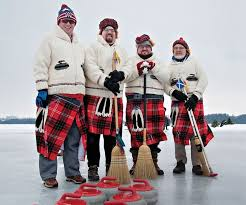
You just got back from the bookstore and you are totally stoked about what you saw. There are a ton of Dark Romances centered around the sport of Curling. OMG! This is amazing. Hot guys with brooms on ice! You couldn't ask for more!


So, off you go to write your next great novel.

Might want to wait a bit. This might not be the best idea and this might be time wasted. This is also one of those times when I always say, if you don't understand the business of publishing, you might want to take the time to learn! This is a business of time. 

What is hot now means that it was hot over a year ago when the editors started the process of buying those books and editing those books. Heck, those books were hot, probably 2 years ago when the authors got the ideas to put those fat guys out there on the ice and some agent and editor figured it might be worth a try and give it a run. 

Remember all of those Hockey Romantic Comedies? Those things were all over the place? But if an author even attempted to reach out to an editor, they were being turned away left and right and were completely confused? If these books were this hot, why were the books being turned away? Because they editors had bought so many of them, they had a ton on their shelves. Now they were doing their best to just get them out of their warehouses. They had gambled the trend would have kept going a bit longer. It didn't.

Publishing is a game of guessing and gambling. Editors and agents have no idea what the future holds. We look around us and see what is happening now and try to guess what might happen. If something is selling now, will it be selling a year from now? Who knows? Editors may be telling people, we don't need westerns and all of a sudden, everyone out there may want westerns? Why? Who knows? 

So, the next time you are at a conference and you hear an editor or agent say, "Just write the best dang book you have!" they mean it! Why? It may be the next trend? It may not? Who knows.

Tuesday, December 26, 2023

Predictions for 2024

Let me first say, things in publishing are not predictable. Just when we think something is going to be "hot" and a new trend, it disappears just as fast. Still, there are a lot of things we can look at with the current books being published that might give us an idea of what might be to come. 

Where will contemporary be? We saw a huge push of contemporary rom-cons this last year. It seemed that we couldn't walk to the romance section and not see another one of those cartoon covers about couples in "funny" situations. I put the word funny in quotes for a reason. Those of you reading these stories have probably noticed the same thing. Remember the movie Groundhog Day? Yep! The stories were not that different from each other. There were only so many of those awkward relationships that could be played out. I met with an author at a conference in November and she said pretty much the same things. She said that one of the authors she read, each new book was pretty much predictable.

So, where will contemporary projects go? I think we are going to start moving to projects that are a bit more serious. Essentially, take the tone of women's fiction and write a contemporary. Now, don't misinterpret this. I am not talking about a drama overload. We aren't talking about stories where the characters are facing divorce, illness, drugs and death. I personally think we are going to see more stories that have a real person feel to them. (And no, these are not fictionalized stories of real people).

How about historical romance? Thank you Julia Quinn for turning people on to historical romance. Unfortunately, authors just dove all over this and swamped the market. Regency will still be strong. Thanks to Gilded Age, stories between these to periods will still be out there. These authors have tried to tap into the rom-con approach, but like the contemporary projects, these have sort of run their course with innovative plot lines. 

So should I write historical Like I have always said, write what you know and what you want to write. Don't jump into some era you don't understand. I do think we might see some stories moving into more contemporary times. WWII stories (without the war) I believe might do well. It will be limited but I do think authors might be able to do something about characters not involved with the war, but being impacted by the war. We'll have to wait and see.

Demons, dragons, and paranormal, oh my... This genre has a following that is pretty dedicated. I don't see it going off the charts and will continue. I do see more dystopian projects. Sarah J. Maas has pretty much locked into the dragon scene, but I do see opportunities. If you write this, know your market and know what makes your projects unique and stand apart from the others. There won't be a lot of space so you have to be AMAZING!

How about Inspirational? Like paranormal, these authors have their own following. I do think we are going to see a change here, however. Remember the period of time where everyone wanted to write a story about the Darcies? I think we are going to see these same trends. I do think Amish inspirational projects as well as rancher inspirational projects are going to disappear fast. If you think you are going to write the stories about the "good looking single guy next door needing inspiration" I would skip that one. These are pretty stereotypical. You will have to find a new twist.


This is just the tip of the iceberg. I do think that publishers are desperately trying to find something new to attract readers. They are still in a fierce competition against the vast population of people who would rather sit on their phone and binge watch new TV programs. They are fighting against schools that are not having students read anymore. 

So, give us a twist! Give us something new, unique and, more importantly, marketable.

Monday, August 21, 2023

New Trend? Maybe?

I know authors always want to know from editors and agents what the current trend is. Their goal is to immediately start writing in that genre and "hit it big." As always, editors and agents answer the same way. 


If we could answer that, we would all be stinking rich. 

And yet, we turn right around and tell authors to pay attention to what is out there. We tell you to watch what is selling, who is buying, what they are buying and who they are buying.

Yes, we are telling you to pay attention to trends.

As I look out there, I am going to throw this out there for a trend. No, it is not a specific genre, but it is an approach to the stories, plots and characters that I believe will be around for the next couple of years.

Stories will have less complexity. Plots will be basic. Novels will be easy and fast reads. Stories will also be sold on gimmicks and current social media hotspots. Before I go any further, let me also say that these stories will not be those that will last the test of time. I heard a radio personality last week describe it best when he said, "When I finish a book, and don't plan on rereading it, I toss it." That will be this batch of books.

So, where does this come from? Let's look at some signs.

The rise of streaming services...

According to the New York Times, in a July 19, 2023 article, they noted:

Netflix added 5.9 million subscribers to bring its global total to 238 million. Its revenue rose 3 percent, to $8.2 billion, from the same period last year, and the company also said it had $1.5 billion in profit in the quarter, a similar number to last year at this time.

If you think about it, how do phone companies, internet providers and even creators of tablets advertise their products? "Think of all the things you can stream!" And when you think of these programs, none are overly long, the plots don't required a lot of critical thinking skills, and the stories are full of the latest gimmicks and social media trends. People want to sit down and binge watch an entire season in pretty much one shot. 

Even period dramas have turned into "costume dramas" and covers of current pop hits...

Our family saw this big time when the season of Reign came out. My wife and daughters all made comments that they could clearly see all of the dresses these girls were wearing as "supposed period dresses" being worn at prom.

And remember the music? You watch these shows and realize you're humming to a song and you are sure you know it from somewhere. You have! Groups such as Vitamin String Quartet, Two Cellos, Piano Guys, Eklipse, Escala... They are killing it out there! Why do these work? It is connecting the "readers" and the "streamers" to something they know.

TikTok and the rise of influencers...

It doesn't take rocket but listen to the books they all love. More importantly, listen to what they say about them. "Totally loved the characters", "These two are really hot together", "Could not put this down, very fast read." 

The Covers...

Personally, I am not a big fan of the new cartoon covers, but these sell. Why? Because they come across as "fun reads." You simply cannot pick up one of these books and think there is going to be a lot of plot going on. 

Final Thoughts...

For me, I am someone who still loves a book with a little more to it. But, I am finding that I am shifting my thoughts about some of the books I am looking at. I still want a well written book, but those complicated plots and not always going to be a big draw. 

Now, let me say, having an overly simple plot is not easy. These plots lead an author directly into a brick wall of repetition. 


Tuesday, July 4, 2023

What Is The Market Buying? Should You Adapt?

Market research is one of the top skills business people work on. They find what is selling and adapt to those trends. The know where in the world their products are selling and adjust their sales to that market. Honestly, companies who just say they are going to stick to to what they are doing and only sell to where they want, despite what market analysis tells them will fail. 

Publishers are no different. They watch sales of the books they put out. They watch what covers sell and what covers do not sell. The survey their readers to see their likes and dislikes. They watch what seems to be a hot topic or trend in other areas and work to adapt their sales to those trends. 

The reality is that market research is all a huge game of strategy, similar to Chess and other similar games. In most cases, you can make a pretty good estimate. It is not a 100% science, but it is pretty dang accurate.

So, why do I bring this up? Authors, who want to be writing as a profession and as a business seem to think the idea of market research does not apply to them. Authors just sit there and write "what they want to write" or "write where their passion is currently at" even though it is product doomed to fail. 

I don't know how many times I meet authors at conferences who tell me of these great stories they are working on, and yet, are puzzled as to why editors and agents are not interested? "This is a great story!" they proclaim, and yet never look to see that NOBODY is buying that style of writing. 

Authors also get pretty upset when, after all of their dedication and commitment to the publisher, they are told that they are no longer going to publish her books. The company has decided that it is time to cut the author loose. These authors then scream and rant to their friends and on social media of how the publisher is just being unfair. How dare they do this???

Many of these authors often make another mistake. Instead of adjusting their strategies, they essentially "flip off" the publishing world proclaiming the writing community just doesn't know, and they continue with what they are writing. Unfortunately success is often not around the corner. Instead, this move destroys their career. 

If you think adaptation is a joke and to be successful, you just need to "stick to what you know" consider the following. 


Madonna, The Rolling Stones, Jefferson Starship (Starship), John Cougar Mellencamp (w/ or w/o the Cougar) all learned to stay successful, it requires adaptation. And yet, they all kept their own voice. 

Look, if your genre and style is selling well and is current with the market, you have no need to change. Keep going.

HOWEVER...

If the market is changing and your writing is not keeping up with the trend, it might be time to adjust!

Thursday, January 31, 2019

Pay Attention To Trends

OK, let me just first say that most editors and agents will say the same thing. Don't try to chase trends. Don't even bothering to ask an editor or an agent what they see as the next trend. There is no way we can predict these darn things.

But with that said...


Make sure to pay attention to trends.


What?????????????

I was scanning novels on Amazon recently and saw a ton of books that look like there is no traction on their sales. After looking further, I also saw two other things that are important to note. The first is that these are books on topics that are either out of date, or things that there is really no interest in around the world right now. The second, is that these books were all self-published. And this got me thinking to things I hear so many authors say.

There are a lot of authors out there that dive into the self-publishing market because the traditional editors and agents are not open to their book ideas. The reality of the situation is that the editors and agents DID pay attention to trends and we are passing on those books because this is just not something that is selling now.

Here is the thing. We don't try to predict the future, but we do look, when we are acquiring projects if this story would fit with what is currently working in the market now. And, it is just this that writers also need to be doing as they are thinking about where to sell their books and whether or not they should start that next novel.

Yes, there is a belief, and I think we have all said it, that yous should write the novel of your heart. If writing that Alien Vampire Bunny story or that Erotic Inspirational is something you need to do, then do it. We have also said that the market may not be interested in it now, but "maybe" in the future it will be. So that is a gamble you will have to take.

But my question is, if it takes you 6 months to write a great novel, but this is one that the trends say no one is acquiring right now, or there is no traction for this topic from readers, could this time be better spent somewhere else? I would argue YES. Don't waste your time on it.

Tuesday, August 21, 2018

Be Careful Of Following Trends

I want to start with an analogy that deals with food.

I am sure all of us have gone through this before. We find a food we love and we start eating it every chance we get. We find ways to have that meal for breakfast, lunch and dinner. Our family does that during the summer when it gets warm. Pasta salad or regular salad with chicken or shrimp on top and bread. By the end of summer, this just sounds disgusting.

My son does this. He gets hooked on eating one thing over and over again due to his school and swim schedule. When he came home from school, he specifically said he did not want any hamburgers.

Our body just gets to a point where we finally are just saturated from that food.

And the same goes for publishing trends.

I bring this up because I have seen a recent wave of author submitting projects because they see a current trend going with writing. What they fail to see is that, while this trend is hot for books selling right now, it will be 1-2 years before their project hits the stands and then, where will the trend be?

We saw this with vampire romances. You couldn't turn a corner without seeing another vampire making out with a hot cover model. Then we morphed into vamps and werewolves. But what also happened is that every person out there started writing the darn things. This is hot now and they have to get on that bandwagon.

However, the market could only take so much.

We saw the same with Chick-lit. At one point, Chick lit was the ultimate books. Women, Cosmopolitans, Mojitos and Jimmy Choo heels. And then the bottom fell out.

The new trend I am seeing is this huge push for anything with a political theme to it. When I say political, it is anything that could be a rallying cry. LGBTQ, Immigration, Suicide, Women's Rights... and so forth. You get the idea.

While there are indeed great stories and messages to be told here, these are trends. We will get to a point where readers (and this includes editors and agents) will simply say, enough is enough.

I like to think of it this way. As a writer, you want to find a way to stand out in the crowd. You want to be a bit different. No, I am not saying eccentric, but to really have that voice that stands out. As an agent, I am reading for the same thing. I will go through a series of submissions, where everyone seems to be on that same trend and simply scream, "If I see another women's fiction project about a wife who just needs to take a road trip, I will scream!"

A friend of mine was an English teacher and I talked to her when she was in the middle of grading final essays. She too did the same thing. "If I see another paper about the music of Brittney Spears, I will pull my eyes out."

You have to be different. You have to be refreshing. Sure, you have to be relevant for the day, but that does not mean to be a copycat of everyone else out there.

So, what is the next trend? I am going out on a limb here, but I predict, in the romance genre, we are going to return to the basics. Contemporary romances that are normal. Historicals may change time periods but nothing outlandish (Regencies are still hot! But moving to Victorian). Women's fiction is going to move to less extreme scenarios and focus on relationships. Romantic suspense is going to move to more high tech crimes, paranormal, not really sure.

Will I be right? Who knows. Just a gut feeling. Should you start writing in those genres? No, write a damn good story and make sure to be unique (but not weird).

Monday, August 20, 2018

Maybe A Positive Sign?

In a recent article by the American Booksellers Association, retail sales in bookstores was up in June this year.
Retail sales at U.S. bookstores were up by 5.3 percent in June 2018 compared to June 2017, according to preliminary figures recently released by the Bureau of the Census. Estimates reflect sales of all types of participating bookstores, including trade, college, religious, chain stores (including superstores), and others.
As of August 6, the year-to-date sales among ABA member stores, as reported to the weekly Indie Bestseller Lists, are up approximately 5 percent over 2017.
I saw this and I immediately did what I am sure a lot of people did. I got excited.

But...

I had to put all of that in check.

The reality of the situation is that sure, book sales went up. But what we need to start seeing is not just that number to continue to rise, but the number of bookstores rise as well.

If you are in a city like mine, I have my one favorite used bookstore, but to get to a Barnes and Noble, I am looking at a 30 minute trip. Seattle is 45-50 minutes away and then I have to contend with the parking.

So, what about the other places we can get books? Walmart, Target, Fred Meyer (Kroger) and the like? They have books? Well, sort of. The problem, you see, is that their departments are located in or near the media aisle, and what is unfortunate, is that those aisles are expanding to make way for new game consoles, new streaming devices and new televisions.

The reality of the situation is that we need to break this cycle of simply being a get our information on our media devices only.

Yes, I have been ranting about this a lot lately, and it sounds like many of you also support this. But the rest of the world is really struggling with this. Even the POTUS according to a variety of news sources, only wants to see briefs of important things happening in the world and does not want to read the full report.

This is a problem.

I am personally trying to improve this in my life. I get up in the AM, watch a bit of news so I can know how bad the day is going to be, and then I am off of the tech. In the evening, I have even quit spending the last hours of the day normally watching anything on the TV and just grabbing a book to read.

So, let's all make an effort to keep those retail sales up. Let's push to support ANY new bookstore that opens up. Buy books! Buy a lot of books! Let's get back to reading.


Wednesday, July 4, 2018

Why Many Independent Authors Fail

I am reminded of joke my wife and I talk about all of the time. She will read a really bad story and then tell me I should read it too. We then say it is like opening up that carton of milk in the fridge that
is now cottage cheese, and then handing it to someone to have them take a sip to see if it is really bad.

One reason I have heard a lot of authors head to independent publishing is not because the traditional route does not pay well and they can make more money on their own (yes some authors do this). It is however, because those traditional editors and agents simply don't want to represent their work. They are tired of the rejections and simply feel that the traditional professionals don't really have a true sense of what is going on.

Even after I try to argue that these people, with their huge marketing departments and meta-data probably do know what is going on, these authors will still argue that they don't. This is like politics. People will believe what they want to, regardless of the facts sitting in front of them.

But, this is the angle I want to take with this topic today. It actually stemmed from a comment that an author made to me after I passed on a project that was submitted.

The author noted that It was probably time to head to the independent market. This person has been submitting projects for several years now. The book I read was a third book in a series. The first two were in the middle of huge revisions after being rejected by numerous editors and agents, but this third book was "amazing."

I passed on it.

For me, it just was not something that truly connected with me (see one of my prior posts about the subjectivity of the business).

But here are the things we need to really look at. This is a premise that the first two books relied on and numerous editors  and agents have said no to. Note, I do not know the full reasons, but when you see a trend, you have to start to wonder. The thing is, the premise is not working, so the odds are, book 3 is probably going to do the same thing.

And here comes the independent publishing angle.

The author replied to me saying that even though this particular genre was not a current hot seller in the market, the author was going to take all of the books and try the independent publishing approach...

What??????????

Let's consider this.

Numerous people have said the writing is not going to work. These are people who have the marketing departments in their corners saying what things work and don't work. We have a track record of several other books that have had the same success. We have an author who knows the genre is not a hot seller...

And now the author plans on going this alone.

I am just going to leave it right there and let the words speak....

Look, I am not going to say the independent publishing approach does not work. I am not going to say that someone cannot make a career outside of traditional publishing. What I will say is if you see that something is not selling and the market is clearly screaming at you that this is not the right approach, why do you think you can do this on your own and somehow have better success?

Please, stop and think before you dive in. I want to see people succeed and I don't want you to see failure, both professionally and financially.


Tuesday, September 19, 2017

Why Previously Successful Authors Find Success In The Digital Market

As I said yesterday, I was reading an article about how the big publishers were just not signing some of those authors who had made them a lot of money in the past. The author of this article was really trying hard to show that the publishers were making some big mistakes but that these big name authors really didn't need the publishers anyway. As I read the article, I started to realize that this author was missing some big points.

One point that the article made was that these big name people were really finding big success in the digital market. I am not going to deny that. But we have to examine a couple of other avenues though and not just look at this one piece of data. First of all, these authors already have a following. If you get on Amazon or Barnes and Noble looking for a digital book to download, how many of you take the time to see how that established author, the one you already love , published that book. The odds are you don't. You went to that author because you knew who that author was. You had read their works. So why is it the James Patterson's of the world find that success. Because we know James Patterson. It isn't because of the technology.

The second aspect is to really examine what books are these authors putting out there digitally? In many cases, they are re-releasing their back lists. Many authors do this. After a book has run out of steam, the authors get their rights back from the publisher and then move the book on in another format. Some go digital. Some produce it as print. Some do both. In other words, these are not new books. The thing to remember though is that these authors, again, had a following

There is also a third angle that is missing, but something that the traditional publishers figured out with the rise of the e-publishing industry. They produced those books in multiple formats. Look, James Patterson is not stopping publishing his books in print format. When we look at sales figures for authors, we often see the gross sales. We see a combination of BOTH print and digital. Sure, when we look at royalty statements, we break those down, but in many cases, that breakdown doesn't always make it out to the outside world.

Now let's look at why the big publishers are "cutting" those big name people. This author seems to be implying that it is again the digital market that is making the publishers re-think who they sign. They bring it all back to money. There is a part of this that is true. The article does mention how the publishers really cut the mid-list authors. Prior to the recession, publishers took the chances. They can't anymore. But why cut the prior big money earners? There could be other variables.

The first has to do with agents like me. We push for bigger advances for our authors who have worked their butts off for the publishers. Each contract, we want to push for more money for our authors. We want to see them get the raises. But there is a tipping point though. At some point. if the advance is larger than the payout, the publishers simply will not go any further. If the author and the agent feel that they just are not getting what they want, they leave? They turn to digital publishing or self-publishing with less over-head (or so it seems) and they make up the money that way. In other words the publisher didn't necessarily cut the author... the author decided to leave.

The last variable is one that authors simply don't want to admit to. The quality of the book is simply not there anymore. They were hot at one time, but now the books are outdated, repetitive and show no advancement with the times. It is unfortunate, but I see this too often. The spark we saw early in a career for an author is just not there. The writing is just not strong. This, unfortunately will lead to less exciting reviews and that, in turn, leads to lower sales. So, why did the publisher not sign the author to a new contract? The writing is just not that strong.

So, what is the point of all this? It is something I am constantly pounding with people. We are living in a data driven world. The numbers tell us what we should be doing. But we have to remember that those numbers, may have more variables than we are considering. While this article I read sparked some interesting points, it is only the tip of the iceberg.

Monday, May 15, 2017

Finding Trends - Keeping Up With The Times

Editors and agents hate being asked the question of what seems to be the latest trend in publishing. We always end up saying, "If we knew that answer, we could predict the future." Still trends do happen in publishing and it is important that authors pay attention to those trends. Their writing has to adjust to the trends that are out there, or, they will find that their writing may flat-line. Your writing will end up looking like someone in the present day wearing a leisure suit.

When we talk about trends, we are talking about it on two different levels. The first would be the plots of the stories. The second would be the voice of the story. Let's talk about each.

The plots of the stories do change over time. Yes, I understand this is an obvious, no duh type of statement, but, it is a reality. What we are talking about here are what storylines work and do well and what plots are just not going to sell. There will be times when specific stories sell like hotcakes and then the next year, even marketing that story will result in more rejections letters than you can image.

Consider in the early 2000's the meteoric rise of the "chick lit" genre. Editors and agents were clamoring all over each other to get a piece of that pie. We saw paranormal writers jumping from the dark side to even creating vampires with an amazing sense of humor.

And then it stopped.

If you were to even breathe the word chick lit, those same editors and agents ran screaming.

We saw this in paranormals. Vampires and werewolves were hot. And then not.

In historicals, western's were really great stories, and then the tide shifted to these stories having a limited market.

Now please, do not get me wrong. There are still a few authors out there that can hold on, but for these authors, it is because of their following, not necessarily because of the general market.

So, as an author, what do you do? You adjust your writing. You find a way to tweak what you are doing and move it closer to the current market trends. No, you don't have to give up what you are doing, but you will need to adjust.

The second trend that we see is that of voice and style. Here too, you will see a lot of small changes. Sometimes the voice will shift to a high level, literary fiction level, and then it shifts to something much lighter and really the summer read.

But there is also another level. This is simply the style and the voice of the time. Topics, attitudes, word choice, etc. All of these go through huge transformations, and it is up to the author to make those shifts.

I see this a lot with authors who were published earlier and then took a hiatus from writing. Now that the kids are out of the house and they have time, they are returning to their writing. Unfortunately, too many of these authors may have moved into the future, but their voice is still that of a decade or two earlier. If you don't believe me on this, go back and find some of those old romance novels from the 80's and even the 90's. Not something like you would read today, that is for sure.

Again, as an author, you have to adjust with the times if you want to sell.

Now I know that some of you are saying that this is selling out to the establishment. You don't want to write what others are telling you to write. You want to write "Your story." Let me just say, no one is telling you to give up your own voice. This is just an issue of editors and agents wanting you to write a book that will sell. Remember, when your book sells, EVERYONE wins.

Keep your writing, just remember to adjust to the time. Unless you want to look like that person in that wonderful polyester leisure suit!

Friday, December 11, 2015

Researching Trends In Your Publisher Of Choice

We're talking about trends today. How do you make sure that your writing is matching the trends and the voice of the publisher you wish to be with? The answer, surprisingly, is not that difficult. It will take reading (oh bummer) and it will take time (yes, you knew I would bring that up).

The task is simple.

Read the debut authors.

I understand the tendency will be to read the established authors, but the real sample to look at would be the debut authors. These are the people that editors were recently excited about. See what they are doing. If you see that they are staying the course, then you are fine. But...

If these authors are trying new things. Maybe they are now in locations you thought were once off limits, it will give you a sense that the editors are opening up a few doors. The established authors might not head that way because they already have a following of readers who expect certain things.

For example, in historical romance, France was often an area where editors did not place stories. The reason was never really clear, but they knew that market research said those areas just did not sell. And yet, if you have noticed lately, a few more authors were eeking their ways into the countryside of France. In the past, they just passed through, but now they were staying longer. Some authors were even putting their entire story in France.

Does this mean it is a trend? No. It simply means that with this particular publisher (I am going to make you do the research on this one to figure out the publisher), those editors were more likely to accept stories in that area.

Again, this is not something that can be done in a single sitting. I would also argue that asking them in a panel discussion will not yield anything. They will return to the "if it is a good story they will consider it" argument. But, reading for research will give you some insight.

Monday, November 30, 2015

Keep an Eye Out For Trends

"What are the current trends?" This is a question that we are often asked when we go to conferences. The answer we always provide is the same. Quit chasing trends and focus on writing the best dang story ever. And yet, there are ways that authors can use trends to their advantage. The key is being aware of the trends and taking advantage of the situation.

First of all, let me say that if you do see a trend you should not go out to write that story to match the trend. Remember, by the time you see that trend, those projects were in the works a good 6-12 months before. By the time you get your book written and through the critique process and then get the book out the door to the editors and agents, the odds are that trend might be gone.

The key to working with trends is to use the books you currently have. You may have this fantastic book but the market is just not right for it at the moment. That's OK. Just wait! The odds are the market will shift in a couple of months and you can be ready for it.

Depending on the trend, you might also be able to "tweak" your story a bit. We're not talking about serious over-hauls, but minor adjustments. Change a location. Change a job of a character. Steam it up or cool it down. The idea is to make small adjustments.

One of the biggest issues with this whole trend thing is to know whether the things you are seeing is a trend, or just a quick blip on the radar. What you want to do is spend the time watching the other elements of the media. Are you seeing things going on with TV or movies. What seems to be some of the big social trends.

A good example of this is the push for the LGBT movement. As soon as this became a huge national political agenda, it was amazing how fast the publishers wanted to jump on the bandwagon.

How long will the trends last? That is always a tough one. In reality, the publishers shift away from the trends when their bigger name authors find sales declining, or if one of those authors stumble across a new idea.

You can use trends, but be cautious. If all you do is try to follow those trends, you may find your career never really taking off. I would also remind you that some of the best selling authors out there have stuck with one idea and run with it through their whole career.

Wednesday, August 12, 2015

Why We're Quiet About What We Want

A common question that is asked over and over again during those editor and agent panels is, "So what type of project are you really looking for?" When writers hear this, they all lean forward, eagerly waiting that golden gem of an answer that will get them to that coveted "published status."
Instead, they often hear, "We are looking for projects with great characters, great settings and a story that really draws us in."

Um, like, no duh! That didn't give us anything.

But here is the real rationale.

Several years ago, I was at the International Women's Fiction Festival in Matera, Italy and a writer asked just that question. One of the editors openly said she "refused to answer the question." She went on to say that her reasoning was clear. If she were to say she wanted a story about a given topic, all of the writers in the room would immediately run out and attempt to write that story. That was not what she would want. What she wanted, and what all of us want, is for an author to write (as is often described), "the best damn story you can write."

Now, there are ways to find out a bit more of what we are looking for in projects. Reviewing those submission guidelines will give you a sense of the type of story. There, you will often find a bit more other than "contemporary romance." You might find examples of the common themes or characters types we like.

Another place you might find this is on social media with the hash tag #MSWL. Every now and then an editor or agent will post a genre or a genre type he or she is looking for. Pay attention to this!

But here is the thing.... WE DON'T WANT YOU TO WRITE THE STORY.

When we make comments like this, we are hoping you might already have something equal to what we are looking for, or maybe something close to it. As agents, we might have had an editor ask us if we have anything in that genre and we are just looking for them. If the story is not written yet, don't waste your time to drop everything you are doing and write it. By the time it is finished, we have either forgotten we asked about it, or more likely, have already found it and moved on.

Look, we do tell you what we want. We try our best to give you as many specifics as possible. But in the end, we still want that story "...with great characters, great settings and a story that really draws us in." We want the best you can write!

Tuesday, July 7, 2015

Can You Adapt To The Times?

When I think of adapting in the publishing industry, I often find myself thinking about the music industry. First of all, let me say I am not an expert necessarily, but I don't think I am off the mark on this one. Think of the groups that have stood the test of time. Think about the artists that never seem
to go away. U2, Aerosmith, The Rolling Stones, Madonna... we can probably go on and on with this list. What do they all have in common? They have adapted.

Without changing their own unique voice and style, they have found a way to change with the times. They continue to meet the needs of the current group of listeners, in any time they are performing. Simply paying attention to the trends, they are able to sit down, think of what the population wants and how that can be incorporated into their own voice. 

Note here these groups are bringing the outside into their own voice. They aren't changing what they do and sacrificing their own voice and style. They blend the two together.

Successful writers will do the same thing. Their longevity in this business comes from not saying, "This is what I write and to hell with the change." Instead, they simply say, "This is what I write and with a few tweaks, I can meet the needs of the publishing trends."

As an agent, I am always looking for authors who have the ability to do that. You have to be able to demonstrate keeping that voice but meeting the needs of others. Success will not come from being stubborn.

If you wonder about this, go back and take a look at some of the authors who have been around since the late 70's and early 80's. Their voice is still there, even though the stories they write are vastly different in the span of all these years. 

Friday, June 12, 2015

My Book's Not Selling...Why?

In 1982 Thomas Peters and Robert Waters wrote what was known at that time as a key piece of literature in the business world - IN SEARCH OF EXCELLENCE. Peters and Waters identified "eight common themes which they argued were responsible for the success of the chosen corporations, which have become pointers for managers ever since." This text was initially built around a report they did known as the McKinsey 7S Model. That model, focused in on 7 common things they found in all businesses that were successful and continued to be successful.
  1. structure
  2. strategy
  3. systems
  4. style of management
  5. skills - corporate strengths
  6. staff
  7. shared values
Peters and Waters noted that all of these elements had to work together to be successful. Companies were not "making it" or "failing" simply because of one thing. It was the interaction of all of the elements together. If one area was weak, the other areas would "pick up the slack" and cover that weak area until things got better.

When I completed my first Masters Degree in Literacy from Pacific Lutheran University (Go Lutes!) I focused my student on the links between student learning and literacy. Using the Peters and Waters model, I found that student success only happened when 4 individual elements were in alignment.
  1. teacher
  2. student
  3. curriculum
  4. environment

I too found the principles that were working in business were working in the classroom.

So why do I bring this up on a publishing blog? Because these same issues deal with why your book is either being successful or not doing well.

I follow a lot of chats and discussions around the Internet and a common theme I hear from authors is sales. People don't tend to go on and on about great sales (yes we get the NY Times Lists and so forth), but positive sales don't make the discussion boards. What does hit is when the sales of an author declines or "tanks". At that point, the discussion boards explode with all these reasons and explanations why the book is not doing well.

What I find is interesting, in all of these discussions, is the fact that the reasons for that lack of success are always facing outward. "It was the publisher's fault." "The cover design sucked." "The bookstores didn't put my book in the right place." I could go on and on.

Do you notice the one thing that is not showing up here? It is the author as a factor. At no point has the author looked at maybe it was something he or she did that could be the factor. Maybe the story wasn't that good. Maybe the plot and story idea is out of date. Maybe the platform the author selected, especially in terms of self-publishing, was not effective.

One author I noted on one of the chats made a statement that stood out and really exemplified the idea. The author noted, "My sales were terrible this last quarter. You know, I haven't changed the topic or how I write so I don't get it." Ahhhh, that was a key element the author needed to listen to. The author did not make a change. What might have been working in the past, might not be working now.

Now please don't get me wrong. In no way am I saying that the author is 100% to blame. But we cannot say that the other elements of the model are 100% to blame either. Everything has to work in alignment. I should also note, the readers and the consumers are also part of this model and they tend to shift focus at the drop of a hat.

Think about historical romances. Some time periods are just not selling well right now, while others are doing amazingly well. If you are writing in one of those genres that is not doing well right now, guess what? Your sales will be low.

Remember the Peters and Waters model? They noted that one of the other elements would fill in the gaps and make some modifications to get the entire model back on line. Authors are actually the best at doing this when it comes to the publishing model. Slight tweaks of how they do things might be all it takes to get sales back on line. One author at Greyhaus who does write historicals recently made that shift. Known for writing in the mid 1830's just shifted her latest 4 book contract back about 10-15 years. Same stories, same settings, just a slight difference in time. Why? The market was more favorable to that time. Easy fix!

On one final note, what we have to also understand is that the model for sales is not a fixed model. Everyone is constantly tweaking and adjusting to get those sales up. Publishers are trying new things to see if that will get sales heading in a different direction. They keep trying. They might not be able to adjust the other elements of the model (for example they cannot make new bookstores show up in North America), but they can try other things.

The point is, if your sales are down, look at EVERYTHING. But, when you do look, consider also that maybe the reason that last book didn't sell, or you weren't offered a new contract, it might be due to a lack of change on your part.
 

Friday, April 24, 2015

Why Contemporary And Historical Romance Remains Strong

As I was driving into work this AM, I was really thinking about why these two genres seem to always be the "go to" genres. Sure, there are a lot of other genres out there that have huge numbers in sales, but in terms of longevity, it seems to always be the contemporary and historicals that take the prize. Why? 

In simple terms, these two genres don't rely on, for lack of a better word, gimmicks to survive.

Consider genres such as paranormal. We went through a period of time with the vampires and werewolves in every book, but we got tired of those. So we shifted to angels and demons (just a variation on a theme), then off to the Urban Fantasies and then the Steam punk, but these genres just don't last, with the exception of those smaller unique groups of readers who are fans. The thing to understand though, is that these stories all relied on that unique "plot" element to keep the story alive and to support the romance.

The romantic suspenses out there are also in this same situation. To keep the story afloat requires that external plot element of the crime and mystery. Without it, the romance goes no where. 

But when it comes to the contemporary and historical romance, the focus is simply on the romance set in a time period. That's it.

So, if you want to know what I believe will be the trend to follow for the future, my answer is simple. Stick with the contemporaries and the historicals!

Tuesday, January 6, 2015

Book Publishing Predictions for 2015


Well, it is that time of year when everyone feels the need to make predictions for the coming year,
and publishing is no exception. I started looking at predictions on Saturday and what I found was interesting. No one was predicting the same thing. In many ways, it was like opening up a stack of 20 different newspapers and reading horoscopes only to find many contradicting each other. Why is this the case?

In simple terms, no one knows.

If you have ever sat in on an editor/agent panel at writing conferences, a common question that is asked almost all of the time are our thoughts on upcoming trends. Nearly every time, the answers are all the same. "If I had that crystal ball, I would be making a fortune in this business." Which is always followed up by, "We cannot predict what will happen." No one can! Sure, we can make educated guesses but that is about it.

As I scanned the "predictions" on Saturday, I only saw two commonalities from what people were predicting.   The first was that the predictions all showed that their genre, their approach, and their platform would be the one that would take over the world. Being a literacy major, I would love nothing more than to see all of these people correct because that would mean reading is finally getting back into the forefront of our populations. That would be perfect.

The second, however, was more promising. The majority of the articles were discussing change and mentioning the leveling off of the imbalance between indie publishing, e-book and print sales. As I look at it, this is probably the best prediction we can make for 2015. I am betting we can call 2015, THE YEAR OF CHANGE.

As I talked to editors and agents during the end of 2014, they were all discussing "new ideas" and "new approaches." What I found interesting about the comments was the tone. These were not "approaches to beat the competitor" but approaches "to get people reading." It seemed that, for once, the reader was being put to the forefront of the conversation - and this is good.

No, people were not talking simply about "making books more affordable" but more of accessibility. I heard authors who, up until now, viewed each other as the competitor, were now joining forces and creating alliances to "get the word out" about their books. I even saw during the holiday season a promotion that involved authors from multiple publishing houses. We were reminded that it was indeed the book that came first and not the publisher or a name-brand author.

Because Greyhaus Literary Agency focuses exclusively on romance and women's fiction, I did want to toss in my 2-cents worth to be a bit more specific (and maybe to be like everyone else only writing about their own area of expertise). When it comes to change, I also see some huge changes in genre writing. Up through 2014, I saw genre writing really trying to create all of these specialty niches. The problem, however, is that the niches became so specialized, that we lost a lot of readers. That I believe will change. I see us stabilizing the genres and widening the audiences a bit more. No, this is not "cross genre" writing, but simply making it more open to the general public.

I see women's fiction really moving into some difficult and challenging topics this year. I did see an attempt to resuscitate the chick-lit movement, but really,the submissions I saw were simply fluffy attempts at humor. I don't think we are ready for that. With the struggles the world has had over the last couple of years, I do believe people are going to "get serious" and women's fiction is going to reflect that.

Contemporary romances will also continue to be strong. I see a lot of the romances trying to tap into the topic selection approach that women's fiction uses. This year, I see the focus of contemporary romances addressing the concerns of the everyday couple in today's challenging world.

Historical romances are going to continue with their same strength, although I do believe they will also open up doors that, up until now, were closed. We will see authors leaving the salons of the Ton and moving to different locals and different times. Again, the approach is the same as what I talked about earlier, "we are expanding opportunities for readers."

I personally believe the paranormal and the romantic suspense authors will take 2015 to really try to figure out where they want to go. Stories in 2014 (new and published) really started to level out in terms of uniqueness and voice. The few that did make a big splash found ways to do so by daring "outside of the market." I saw this as really a testing of the water.

And of course, as I talk about all of these predictions, we know these are just the thoughts of one person. And of course, I can be wrong just like all of the other people out there. Personally though, I do see a light at the end of the tunnel. I see people working together to put literacy and reading back in front of everyone, whether it is in a paperback, hardback, e-book or audio file. And this is good!


Friday, March 7, 2014

Survey Update on Digital Buying Trends - The numbers!

Here are the results from the survey we ran a couple of days ago. I do some of the responses came back with a split that seemed a bit larger than I had expected.

Do you own a digital reading device?

  • Yes 83.3%
  • No 16.6%

If given a choice and the price was the same would you buy a digital or a print book?

  • Digital 36.1%
  • Print 63.9%
If given a choice would you prefer to buy your book online or in an actual book store?

  • Online 50%
  • Bookstore 50%
Has the cost of books changed the format you buy your books in?

  • Yes 47.2%
  • No 52.8%
First of all, I know that surveys only function as a snapshot and have some limitations. Still, as I pointed out, I found some of the numbers a bit telling!

The simple fact that we have such a high percentage of people with digital reading devices, and yet, if given a choice, they aren't going to go with the digital book is fairly interesting. I have said this before. When I sit at swim meets and scan the stands of parents waiting for their kids to swim, they are always on their iPads and other digital devices, and yet, very few are using the device for reading. Games, movies, Facebook and emails seem to be the standard activity.

I do believe, for me, the one question that stands out the most is the fact that 2/3 of the respondents are telling us that they prefer the print books. They want that hard copy (or paperback) in their hands. And yet, how often do we hear publishers going on and on about how many people really want their books digitally. Is this really the case?

Just something to consider for the weekend!


Wednesday, March 5, 2014

Buying Trends Of Readers

I was sitting with the dance moms at my daughter's recital this last weekend and we were talking about books. Again, I heard the same comments I continue to hear time and time again:

  • "I love the feel of a book in my hands when I read."
  • "Sure, I'll get a book for my iPad but I really hate reading on the thing."
  • "I really wish bookstores were back, I used to read so much more."
  • "I can't even figure out the darn reading apps."
I am always hearing comments like this. And yet, daily we are bombarded here on the Internet with articles and blog posts showing "supposedly" more people wanting to move to a digital books. We hear publishing professionals proclaim in business meetings, write articles for magazine and sit on conference panels that "readers really do want to see more things digitally."

But on the streets, I keep hearing otherwise.

I even hear from writers who will tell me they love books in the traditional format.

Yes, we know brick and mortar stores disappeared, and now, it seems much of the reason for this shift was not so much the book buying trends but the bad business models some of the stores used. Many of these stores forgot they were a book seller and attempted to do much more.

So I thought I would try something. I will tell you, this will only work if we get some feedback from you.

What I am asking is to do a little survey for me. At the same time, ask all those around you what book format they really prefer. Take out the cost factor. Take out the fact that they might be forced to use Amazon because their bookstore shut down. Let's just focus on the book buying trends.

I also have a 4 questions survey you can take that would help us out! Forward this link to your friends. As we all know, the more numbers we get, the more accurate the results will be.

SURVEY LINK! (Now that the survey is done, I have removed the link! Thank you to those who responded!)


Honestly, I would love to know this.