Showing posts with label prologues. Show all posts

Tuesday, January 19, 2016

To Prologue On Not?

When it comes to prologues and epilogues, writers tend to be pretty clear on their stance. Their either like them or hate them. I often find very few authors who will change their attitude about these little devices. For myself, I am certainly not someone who is against a prologue in a story, but I will have o say that too often, writers inserted pages that simply were not necessary. Of course, the end result is that it took me longer to get to the story, and often, the prologue turned me off.

I am not alone in this. From the website How to Start Your Novel, here is what other agents say:

“I’m not a fan of prologues, preferring to find myself in the midst of a moving plot on page one rather than being kept outside of it, or eased into it.”
– Michelle Andelman, Regal Literary
“Most agents hate prologues. Just make the first chapter relevant and well written.”
– Andrea Brown, Andrea Brown Literary Agency
“Prologues are usually a lazy way to give back-story chunks to the reader and can be handled with more finesse throughout the story. Damn the prologue, full speed ahead!”
– Laurie McLean, Foreword Literary

According to the website "Literary Devices" a prologue is: " a sort of introduction to a story that usually sets the tone for the story and acts as a bit of a backgrounder or a 'sneak peek' into the story." I think it is this definition that really tells us why the agents are hating the use of prologues by so many authors out there. In simple terms, authors are using these as information dumps.

I think the thing to be aware of is that the prologue has to serve a purpose. Editors and agents are constantly screaming about getting us directly involved with the story. Dumping us in the middle of the villain (who is often unnamed) just confuses us. Unloading the back story you needed to understand your character and the motive is simply not going to work either.

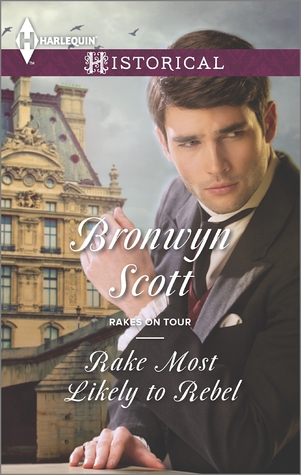
I do have to say, one of my Greyhaus authors has done a great job with a prologue. Bronwyn Scott's series, RAKES ON TOUR used essentially the same prologue for all 4 of the books. Each times, we began with the same scene of the 4 guys getting ready to head off on their Grand Tour. But here was the twist. Each one was told from their individual points of view. When readers read the opening pages, they were revisiting the scene that started out this grand journey for each of them.




The prologue must really serve a purpose. It might be great as a set up for when the characters were younger and the break up they had that has kept them apart for so long.

Or, if you want to think of setting the tone for a story, think of the beginning of Phantom of the Opera. The story starts so many years after the accident. We see where people ended up and want to know who we got there.

If you think of a prologue, you have to think of it as a teaser. Draw us into the story but don't confuse us.

For me, I will, about 99% of the time, steer away from prologues. I will tend to side with Laurie's comment above, "Damn the prologue! Full steam ahead!"

Tuesday, December 23, 2014

To Prologue? Or Not?

I am one of those readers who is not a big fan of the prologue. I guess most of it has to do with the simple fact that so many authors really have no clue how to use a prologue. Let's begin first with the definition.

The prologue comes from the Greek word, prologos which means "before word". The prologue is generally an opening to a story that establishes the setting and gives background details. (This comes from the online website, literarydevices.net). Essentially, we can consider the prologue as being a teaser or an introduction to the story. It is there to draw the reader in and hook the reader.

The problem, all too often, is that writers simply use it as a back story dump. They just crank out information they needed to understand their own characters, but for the rest of us (the readers) this is information that means nothing to us since we have no context to attach it to. Along the same lines, this early scene really does nothing to hook us and draw us in. Sure, we have questions, but these are not questions of, "Wow! I wonder how that is going to turn out?" but more of "Who on Earth are we talking about?"

I would also add that too often, writers call those opening pages a prologue, when in reality, it should simply be called Chapter 1. The author has simply started into the story and then keeps going. This is not information that comes, as the Greek word implies, before the word just something that happened chronologically.

Another twist to the prologue that I have struggled with often shows up in those suspense and thriller novels. The author takes us into the mind of the villain in the story, and we see the dastardly deeds being crafted. The author uses no name, not location, no setting and attempts to show us what we are going to be facing. Again, the problem here is we have no context to work with. We really don't know who this bad guy is or why they are out to cause problems. We don't even have a hero or heroine who we want to warn.

I guess for me, I would much prefer to get the story going. You can give us that back story information once we get into the main story arc, either through introspection, dialogue or even flashbacks. If you do want to do a prologue, make it truly a prologue and not simply a short chapter 1.


Tuesday, March 23, 2010

To Prologue or Not To Prologue, That is the Question...

"So, I'm thinking of starting my story with a prologue, what do you think?" My simple question is Why?

Too often, I think writers turn to using a prologue for their story because they simply have an information dump to get off of their hands. There is this belief that we will need to know all that went on in the past to understand the conflict that is happening right now. Unfortunately, this is far from the truth.

When I see a writer submit a prologue to me, the first thought I get is either, A) it is the scene with the villain in a romantic suspense; B) the trauma the heroine went through that she is repressing; or C) the trauma the hero went through that he is repressing. Needless to say, the story is now not starting with any movement forward and the reader is left sitting with this throught of "who cares and when will I need to use this information?"

I went back and did some digging about definitions of prologues and the key thing that stands out is that it is more than simply "backstory". This is information that can not be gotten to the reader any other way. In other words, we are forced to use the prologue because the reader truly would be lost without it and there is simply no other place to put it.

When we look at two of those options I mentioned above (the hero and heroine) element, these are pieces that will come out later in the story anyway when they divulge the information to each other...

"Why won't you love me Cassie?"
"I can't I just can't...", she whimpered into his alien vampire bunny fur.
"I don't understand, tell me and maybe I can help"
Whimpering she began, "When I was younger, my father made me drink carrot soup every day..."

Get the idea. We were going to hear this element anyway so why are you giving it to us now?

As far as the villain issue, this can also be brought to a later part in the story AFTER we have gotten to know the hero and heroine. We see the people we are cheering for and then you throw a cog into the works. Infintely better.

The key to these little bad boys is simple.
  • Keep it short.
  • Make it relevant
  • Make sure it is more than a back story dump
  • Make sure you cannot and will not use it anywhere else in the story.

Have fun.

Scott